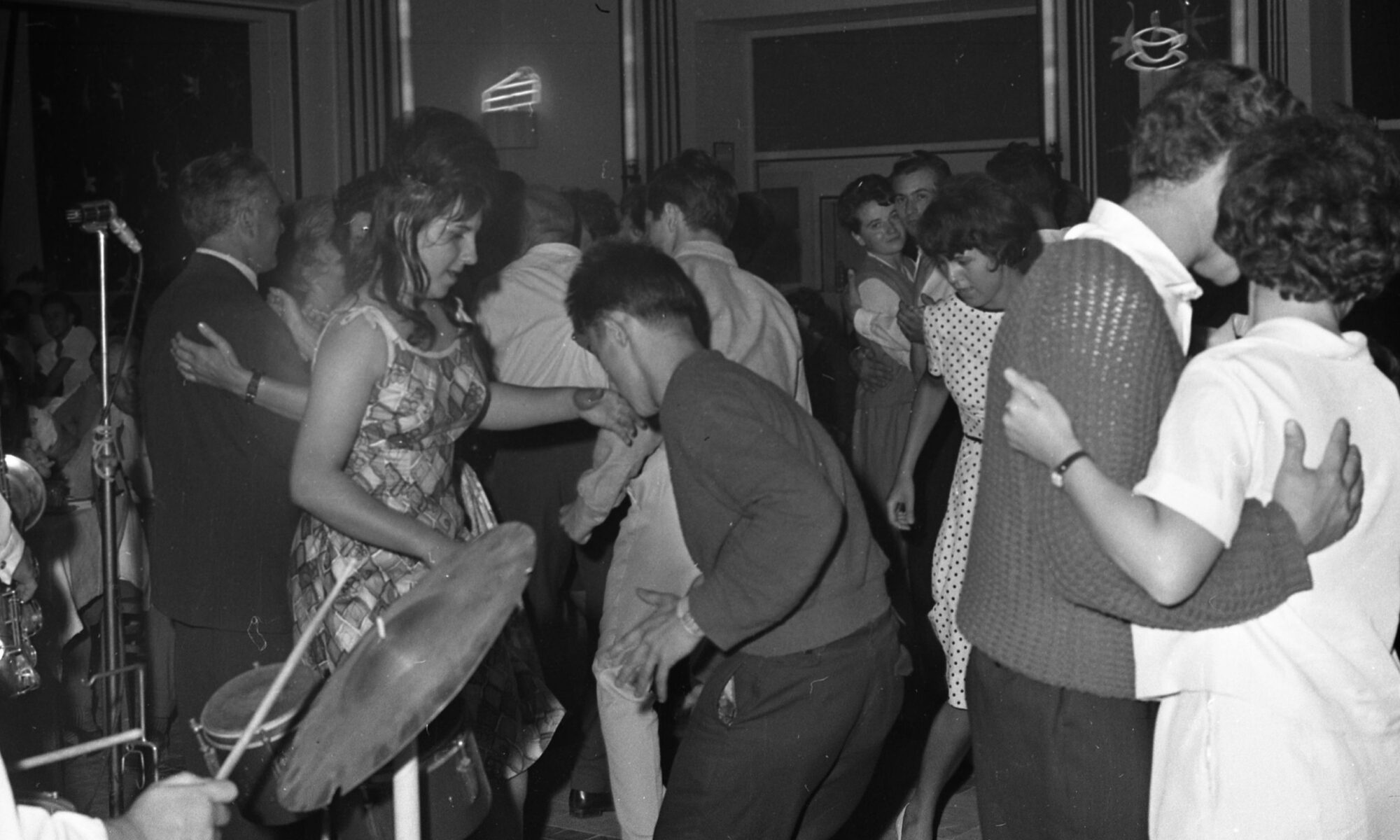
Az 1950-es évek elejétől kiépülő központosított szocialista eszpresszóhálózat megörökölte a vendéglátó terekben való élőzenélés polgári hagyományát. Igaz, még nem Budapest első, 1937 és 1944 közt megnyílt eszpresszóinak idejétől, amelyek iparjogi szempontból – a kicsiny üzletméret okán – a Kávémérők Ipartársulata alá tartoztak. A kávémérésekben pedig mindvégig tilos maradt az élőmuzsikálás. Az örökség a kávéházi világból származott át a már nagyobb alapterületű szocializmus korabeli eszpresszók pódiumaira. A jobbára néhány tagból álló zenekarok vagy sok esetben egyetlen zongorista által szolgáltatott muzsikálás természetes velejárója lett így az eszpresszós időtöltésnek, s az is maradt egészen az 1960-as évek végéig, amikor az élőzenénél nagyságrenddel olcsóbb zeneautomaták mind nagyobb számban kezdtek megjelenni a különféle vendégterekben. Még nagyobb horderejű változást hozott a fiatalabb nemzedékek ízlésváltozása. Az elsöprő erővel fel(illetve a zárt országhatárokon át is be)törő beatzene, a külföldi és mindinkább a hazai együttesek merőben más zenei világa, újszerű mondandója kezdték üressé tenni számukra az elődök muzsikáját. Az eszpresszós élőzene az 1980-as évekre jelentősen visszaszorult, majd a rendszerváltás első évtizedében föl is számolódott – az eszpresszókkal együtt.
Ha szeretné közelebbről megismerni a zene és a presszók kapcsolatát, hallgassa meg Cseh Tamás Eszpresszó c. dalát a kiállítás végén elhelyezett fülhallgatón!
What’s this? – It’s an espresso
The centralized communist espresso network, built from the early 1950s, inherited the middle-class tradition of playing live music in catering facilities. Admittedly, not yet from the time of Budapest’s first espresso shops, opened between 1937 and 1944, which, in terms of industrial law, due to the small size of the business, belonged to the Industrial Association of Café Owners. In cafés, live music remained prohibited throughout. The heritage was transferred from the world of cafés to the podiums of espresso bars of the communist era, which already had a larger floor area. Playing music provided by bands consisting mostly of a few members or, in many cases, by a single pianist, thus became a natural part of the pastime at espressos, and remained so until the late 1960s, when music vending machines, which were an order of magnitude cheaper than live music, began to appear in increasing numbers in various client areas. An even more far-reaching change was brought about by the change in taste of the younger generations. The beat music that broke through with overwhelming force (and even across Hungary’s closed borders), the completely different musical world and novel message of foreign and increasingly domestic bands began to make the music of their predecessors empty for them. Live espresso music declined significantly by the 1980s, and then it was eliminated in the first decade of the democratic transition, along with espressos.
To find out more about the relationship between music and espressos, listen to Tamás Cseh’s song Espresso on the headphones placed at the end of the exhibition.
I have always sensed a contradiction in this word: funeral celebration. The thought of death is terrible; mourning is a bleak and oppressive feeling, hardly fit for festivity. Yet death is not an utter ending, nor does mourning remain mere mourning for long. The life of a writer does not pass away; it is completed, finished, like a book. And that is as much a beginning as it is an end. I bid farewell, and feel as though I stand at a departure. Dezső Kosztolányi now sets forth in final and perfect radiance into the future, into the Hungarian vastness. He departs along the path where Endre Ady and Árpád Tóth have already gone before him. Thus the renewal of Hungarian poetry at the dawn of the century becomes, almost before our eyes, the province of literary history; and we, who were still its witnesses and workers, feel ourselves growing lonelier among the living. Yet our personal grief must now be restrained. What belongs to literary history does not necessarily belong to the past, and he who has died is often more alive than the living. It is commonly said: the man dies, the work lives. But this is not entirely so. In the work, the man himself lives. Indeed, it is he who sustains the work, which has become as it were his second body — a body built of words in place of the body built of cells and fibers that has been lost. Kosztolányi’s words are sound, like healthy bodies; they endure like strong sinews. Firm, wrought of the finest substance of the Hungarian tongue, they withstand the changing seasons of time.
Mihály Babits: Evening Question
When evening — that softly covering black, smooth velvet coverlet spread by a giant nurse — slowly enfolds the cherished earth, and so gently that every blade of grass stands straight beneath its tender veil, and no petal of the flowers is wrinkled, nor does the delicate, double wing of the painted butterfly lose its rainbow glaze; and they rest beneath this shadowing shroud, this light and silken velvet cover, so that they scarcely feel its weight — then, wherever you may wander in the wide world, or sit at home in your brown and mournful room, or idly watch in a café as one by one they light the gas that shines like day; or wearily, upon a hillside with your supper, gaze through leaves at the languid moon; or along a dusty country road your drowsy driver nods and sways; or upon the rocking deck of a ship grow dizzy, or recline upon a train; or wandering through a foreign city pause at the corners, lazily admiring the long threads of distant streets, the double line of streetlamps; or in the watery city, in Riva, where flame is broken on a matte opal mirror, brood backward into the distant past whose memory sweetly torments you — into your vanished years, which, like the imagin a magic lantern, are and are not; whose memory can never be cold, whose memory is burden and treasure both — there, bowing your head, heavy with remembrance, to the marble ground, wandering among beauty and delight, you will yet timidly wonder: what is all this beauty for? You will still ask, forlorn: why the silken water, the variegated marble? why the evening, this winged coverlet? why the hills and why the trees, and the sea into which no sower casts his seed? why the ditches and the ebbing tides, and the clouds, these sorrowful daughters of Danaus, and the sun, that burning stone of Sisyphus? why the memories, why the past? why the lamps and why the moons? why the time that never finds its end? Or take the little blade of grass as example: why does it grow, if it must wither? why wither, if it grows again?
Frigyes Karinthy: Méné, Tekel
Hello — Frigyes Karinthy speaking, poet of the twentieth century! Méné, Tekel… Listen — then repeat after me. I speak in verse so you remember better. I carve it in your heart and grind it in your ear: It was ill to be human in this world, in an age whose scales are false, that will betray you tomorrow as it betrayed you yesterday. At noon man was tempted; at night the ghosts wept. They mourned Christ’s tortured cross, yet once again the murderer was hailed a hero. The man drank blood, the woman marrow; outside the shop the poet bawled. Silk and brocade were given to the dead, the living went ragged and spat blood. Flowers were strewn upon the grave, the living shivered in the snow. With loud voice they swore beside the coffin; the living moaned softly over peas. The child stared wide-eyed in wonder; the elders listened, cowardly and sly. The base one spat in his master’s face — filthy wretch, shameless pupil. Ships rushed headlong into blazing peril; the harlot’s gaudy rags flew in the wind; but the fairest and most splendid thing rotted upon a dung heap like a dog. Now, wringing my hands, weeping, I beg you: prepare — attend — the true scales are preparing. Set this now in your heart and ear — its meaning you shall learn in time. MÉNÉ, TEKEL— whether you grasp it or not, mark it well: it speaks to you and for you. One day my song, uttered in darkness, will blaze like writing of fire upon the wall. Remember: today these are gray words — but they will live when I do not, they will be when I am not.
Frigyes Karinthy: Sketches
Hello — Frigyes Karinthy speaking, journalist! In this capacity I report the following. It is possible that beginning tomorrow the newspapers will appear in eight pages owing to shortage of paper. Should the shortage intensify, we must be prepared that within a month they will appear in two pages, and thereafter in only one. Finally the government will instruct the paper mills to produce paper with only one side. Our task is to preserve every column of the paper; admittedly this will be difficult. The frames must be narrowed. We must confine ourselves to essentials. As a conscientious and far-sighted journalist, it is fitting that I practice this style. I therefore have the honor of submitting to the editor the following draft. The paper will appear thus; every column shall remain: Leading Article. — Hungarian concerns. The foreign and paper shortage not at all as threatening as many imagine. Feature. — A Life. By F. K. — The learned lady came smiling from the next room. “A boy!” she said brightly. Pál Kurt sighed. “Thank God,” he cried, “let his name be Peter!” Little Peter Kurt whimpered in the cradle, and a few years later everyone admired his fine velvet coat. A beautiful blond child he was. “Petey, Petey!” his mother called. Petey, playing in the nursery, lifted his curly head — and ten years later passed his final examinations. The university years passed like a dream. One day Peter sat sadly in his rented room: “Eh, what is life?” he murmured — and fifteen years later accepted a district physician’s post in Tapolca. The girl trembled, plucking at the whispering acacia leaves, looked at Peter; Peter gently drew her head to him, kissed her — and their child, Charles, was entered in military school at fifteen. “That is to say, what I meant to say…” Peter began — but fell silent, recalling that he had died two years before. The End. Daily News. — Painter commits suicide. Reason unknown. — Run over by tram. Funeral tomorrow. — Price gouger sentenced. — Fraudulent clerk sought by police. — Hotel thief claims pathological coat-collecting mania. — Madman in the street; observation unimpaired. — Literature: Leo Ábránd, Epic of the War, nine volumes. Rubbish. — Court: eightynine years’ hard labor distributed among several defendants. They accepted the verdict and appealed. Odds and Ends. — The flea. The flea is stronger than the elephant, because if the elephant were a flea, he could not jump so high.
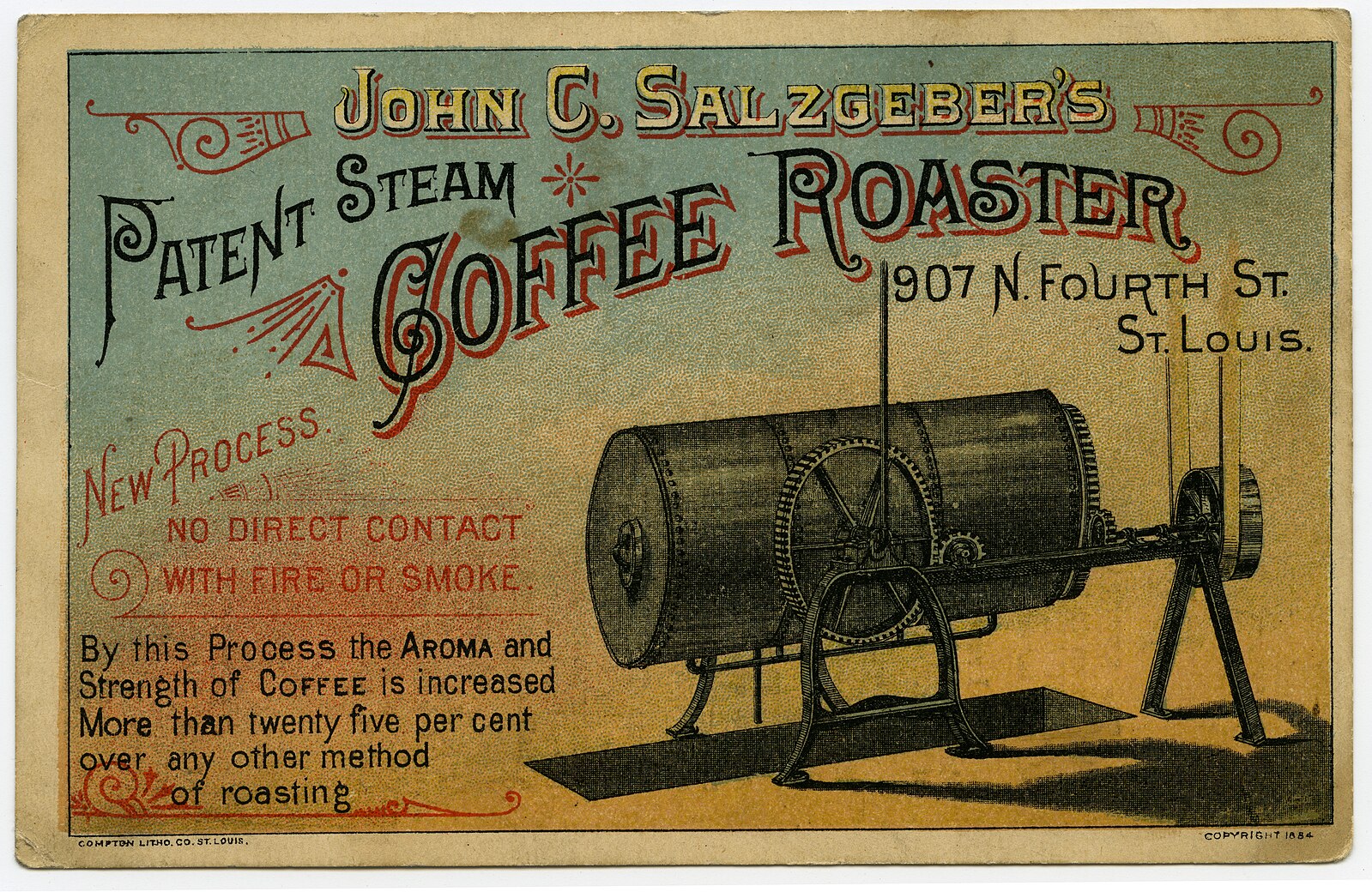
A kávépörkölés története Etiópiában kezdődött, ahol a kávécserje őshonos, azonban a legkorábbi időkben a kávét még nem pörkölték a mai értelemben. A kávészemeket nyersen vagy enyhén szárítva használták fel, gyakran összezúzva és zsiradékkal keverve, illetve erjesztett ital formájában fogyasztották. Ha történt is hőkezelés, az inkább szárítás vagy nagyon enyhe pirítás volt, amely nem alakította ki a később ismert pörkölési ízeket. A valódi kávépörkölés az arab világban, elsősorban Jemenben és az Oszmán Birodalom területén alakult ki a 15. század körül. A kávészemeket nyílt tűz fölött, serpenyőben vagy lapos fémlemezen pörkölték, kézzel keverve. Ez gyors és gyakran egyenetlen pörkölést eredményezett, amely világos vagy legfeljebb közepes pörkölési szintet adott. Az így készült kávé savas, fűszeres, élénk ízű volt, és ez a stílus rögzült a török kávé hagyományában is, amelyhez finom őrleményt és világosabb pörkölést használtak. A 17. században a kávé Európába kerülésével a pörkölés is elterjedt a kontinensen. Kezdetben itt is főként háztartásokban pörkölték a kávét, vasserpenyőkben vagy kézi hajtású forgódobokban. A pörkölés még mindig kis mennyiségben történt, friss fogyasztásra. Az egyes országokban eltérő ízlés alakult ki: Észak-Olaszországban inkább a közepes pörkölést kedvelték, amely megőrizte a savasságot, míg Dél-Olaszországban idővel egyre sötétebb pörkölések váltak népszerűvé. Franciaországban a közepesen sötét pörkölés terjedt el, Angliában pedig sokáig világosabb pörköléseket alkalmaztak. A 19. század ipari forradalma alapvetően megváltoztatta az eljárást. Megjelentek az első ipari pörkölőgépek, amelyek egyenletesebb és kontrolláltabb eredményt biztosítottak.
Közép-Európában a 19. század közepétől meghatározóvá vált a bécsi pörkölés: ez a világosabb, közepes pörkölés jól illeszkedett a hosszabb beszélgetésekhez, a szűrt kávékhoz és a kávéházi fogyasztáshoz. A velencei pörkölés a 19. század végén és a 20. század elején terjedt el, amikor a sötétebb, testesebb, kevésbé savas kávékat részesítették előnyben. A francia pörkölés a 20. század elejétől vált általánossá Nyugat-Európában, míg az olasz pörkölés a 20. század közepétől, az eszpresszókultúra megerősödésével vált dominánssá alacsony savasságával és erőteljes, kesernyés-csokoládés ízeivel. A kávé tömegtermékké válása és a hosszabb eltarthatóság, valamint az állandó ízprofil megtartásának igénye is ennek a trendnek kedvezett. Különösen Észak-Amerikában terjedt el a közepesen sötét pörkölés, amely kevésbé hangsúlyozta a kávé eredeti savasságát, és jobban illeszkedett a nagy mennyiségben, filteres módszerekkel készített kávéhoz. Skandináviában ezzel szemben világos pörkölési hagyomány alakult ki, amely a kávé természetes savasságát és gyümölcsös aromáit emelte ki. Németországban és Közép-Európában inkább a közepes pörkölés maradt domináns a 20. század folyamán is. A 21. században a specialty kávémozgalom újraértelmezte a pörkölést világszerte. Egyre nagyobb hangsúlyt kapott a termőterület, a fajta és a feldolgozás, és ennek megfelelően sok pörkölő visszatért a világosabb pörkölésekhez, különösen Észak-Amerikában, Európában és Kelet-Ázsiában. Ugyanakkor a hagyományos sötét pörkölések továbbra is meghatározóak maradtak olyan régiókban, mint Dél-Európa és Latin-Amerika egyes részei. Így a kávépörkölés története napjainkra a különböző történelmi és kulturális rétegek egymás mellett élését mutatja, vagyis a világos, a közepes és a sötét pörkölések mind eltérő hagyományt és földrajzi kötődést hordoznak.
The basis of coffee brewing: roasting
The history of coffee roasting began in Ethiopia, where the coffee shrub is native, but in the earliest times, coffee was not yet roasted in the modern sense. Coffee beans were used raw or lightly dried, often crushed and mixed with fat, or consumed in the form of a fermented beverage. If there was heat treatment, it was more like drying or very light roasting, which did not develop the roasting flavours known later. Real coffee roasting developed in the Arab world, primarily in Yemen and the Ottoman Empire around the 15th century. The coffee beans were roasted over an open fire, in a pan or on a flat metal plate, stirring by hand. This resulted in a fast and often uneven roast that gave a light or at most medium roast level. The coffee made in this way was acidic, spicy, with a bright taste, and this style was also anchored in the tradition of Turkish coffee, for which a fine grind and a lighter roast were used.
In the 17th century, with the introduction of coffee to Europe, roasting also spread across the continent. Initially, coffee was roasted mainly in households, in iron pans or hand-driven rotary drums. Roasting was still done in small quantities, for fresh consumption. Different tastes developed in each country. In northern Italy, medium roasts were preferred, which retained acidity, while in southern Italy, darker roasts became more and more popular over time. In France, medium-dark roasting was widespread, and in England, lighter roasts were used for a long time. The Industrial Revolution of the 19th century fundamentally changed the procedure. The first industrial roasting machines appeared and provided a more consistent and controlled result.
In Central Europe, Viennese roasting became dominant from the mid-19th century: this lighter, medium roast was well suited for longer conversations, filtered coffees and café consumption. Venetian roasting became widespread in the late 19th and early 20th centuries, when darker, fuller-bodied, less acidic coffees were preferred. French roasting became common in Western Europe from the early 20th century, while Italian roasting became dominant from the mid-20th century, with the strengthening of espresso culture, with its low acidity and strong, bitter-chocolate flavours. This trend was also favoured by the fact that coffee had become a mass product, that it had a longer shelf life and by the need to maintain a constant flavour profile. Especially in North America, medium-dark roasting was widespread, which less emphasized the original acidity of the coffee and was better suited to coffee made in large quantities using filter methods. By contrast, in the nordic countries, a clear roasting tradition developed, emphasizing the natural acidity and fruity aromas of coffee. In Germany and Central Europe, medium roasting remained dominant throughout the 20th century. In the 21st century, the specialty coffee movement has redefined roasting around the world. With an increasing emphasis on growing area, variety, and processing, many roasters have returned to lighter roasts, especially in North America, Europe, and East Asia. At the same time, traditional dark roasts have remained dominant in regions such as southern Europe and parts of Latin America. Thus, the history of coffee roasting today shows the coexistence of different historical and cultural layers. In other words, light, medium and dark roasts all carry different traditions and geographical ties.
Az 1950–60-as évekre jellemző dugattyús, karos kávégépek mai szemmel nézve viszonylag egyszerű szerkezetek, ugyanakkor működési elvük időtállónak bizonyult. Ennek köszönhetően ezek a gépek napjainkban is megtalálhatók a kereskedelmi forgalomban. Az első modellek az 1940-es évek végén jelentek meg, felépítésükben azóta is csupán kisebb módosítások történtek. E géptípus kialakításánál a főzőfej egy masszív, mintegy 3–4 kilogramm súlyú sárgaréz dugattyúházból áll, amely közvetlenül a gép kazánjához csatlakozik. A dugattyúház egy pipacsövön keresztül áll kapcsolatban a kazánban lévő vízzel. A főzőfej belsejében helyezkedik el maga a sárgaréz dugattyú, amelynek mindkét végén gumitömítések találhatók. Ezek biztosítják a vízzárást, megakadályozzák a szivárgást, valamint azt, hogy a víz visszajusson a kazánba. A dugattyúház falán általában négy, egymással szemben elhelyezkedő nyílás található, amelyek lehetővé teszik, hogy a kazántérből a víz a dugattyútérbe áramoljon. A dugattyús, karos gépek fejlődésében Achille Gaggia újítása jelentett fordulópontot. Az általa bevezetett megoldás során egy masszív acélrugót helyeztek el a dugattyú körül, amely lehetővé tette a dugattyú szabályozott lefelé mozgatását. A kar lehúzásakor a rugó összenyomódott, miközben a dugattyú a dugattyútér felső részébe emelkedett. Ennek hatására a kazán túlnyomása révén a dugattyútér megtelt forró vízzel. Amikor a barista elengedte a kart, az összenyomott acélrugó lefelé nyomta a dugattyút, így a víz rendkívül nagy és egyenletes nyomással préselődött át a kávéágyon. Ez az eljárás tette lehetővé az eszpresszókészítéshez szükséges magas nyomás elérését, valamint a jellegzetes, sűrű krém – a crema – kialakulását.
Ezek a manuális dugattyús gépek viszonylag nagy víztérrel dolgoztak: jellemzően 3–6 liter vizet melegítettek forráspont fölé. Az ilyen mennyiségű, meglehetősen forró víz a kávéra engedve gyakran túlzott kivonatolást eredményezett.
2.-Sűrű habréteg a kávé tetején – a crema. Thick layer of foam on top of the coffee – the crema / kávéáruház
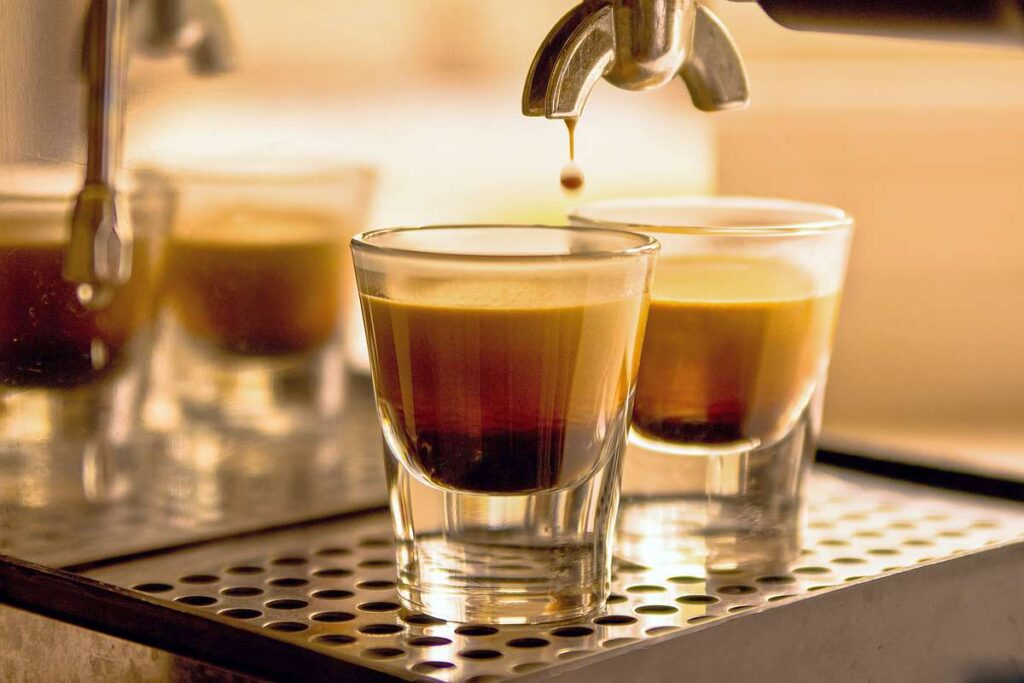
A crema a modern espresso egyik jellegzetes eleme, amelynek felfedezése Achille Gaggia nevéhez fűződik, hiszen ő készítette az első nagy nyomással működő kávégépet, a Lampot, amely már 9 bar nyomáson főzte a kávét. A korábbi eszpresszógépek mindössze kb. 1,5 bar gőznyomással dolgoztak, így nem tudtak cremát létrehozni. Az új, aranybarna habot eleinte sokan szokatlannak találták, de Gaggia kiváló marketingérzékkel fordította ezt előnyére: gépeit úgy reklámozta, hogy azok a híres Crema Cafe Naturale-t készítik. Így a crema hamar az espresso védjegyévé vált. A fizikai és kémiai magyarázat A pörkölés során a kávészemek belseje szivacsos szerkezetet vesz fel, amelyben a CO₂ (szén-dioxid) megreked. Minél magasabb a nyomás a szűrőkosárban, annál több CO₂ oldódik ki a kávéból. Amikor a kávé a csészébe kerül, az atmoszférikus nyomás miatt a gáz már nem oldódik tovább, így a felületaktív anyagok csapdába ejtik, így keletkezik a crema. A jelenség hasonló a sör vagy a pezsgő habjához. A crema színe és mennyisége a kávé fajtájától és a pörkölés mértékétől függ: a robusta kávé általában több cremat képez (kb. kétszer annyi CO₂-t tartalmaz, mint az arabica), míg a világos pörkölésű kávénál a crema vékonyabb és gyorsabban szétesik. A sötét pörkölésű kávé habja ezzel ellentétben vastag, ami képes akár a cukrot is megtartani.
A nagy nyomás nemcsak a CO₂-t szabadítja fel, hanem az illóolajokat és egyéb szerves vegyületeket is, amelyek hozzájárulnak a kávé testességéhez, ízéhez és a crema színéhez, állagához.
Achille Gaggia’s innovation
The piston lever coffee machines typical of the 1950s and 60s are relatively simple structures by today’s standards, but their operating principle has proven to be timeless. As a result, these machines are still available for sale. The first models appeared in the late 1940s, and their structure has been subject to only minor changes since then.
In the design of this type of machine, the brewing head consists of a massive brass piston housing weighing about 3-4 kilograms, which is directly connected to the boiler of the machine. The piston housing is connected to the water in the boiler through a poppy tube. Inside the brewing head is located the brass piston with rubber seals at both ends. These ensure watertightness, prevent leakage and allow water to return to the boiler. The wall of the piston housing usually has four openings opposite each other, allowing the water to flow from the boiler room to the piston chamber. The development of piston lever machines was marked by Achille Gaggia’s innovation. The solution he introduced is a massive steel spring placed around the piston, which allowed the piston to be moved downwards in a controlled manner. When the lever was pulled down, the spring was compressed, while the piston rose to the upper part of the piston chamber. As a result, the piston chamber was filled with hot water due to the overpressure of the boiler. When the barista released the lever, the compressed steel spring pushed the piston downwards, so that the water was pressed through the coffee bed with extremely high and even pressure. This process helped achieve the high pressure required for espresso production and create the characteristic, thick cream, the crema.
The previous machines with manually operated pistons had rather large water tanks: up to 3-6 litres of water was heated above boiling point. Such an amount of fairly hot water when poured on the coffee often resulted in excessive extraction.
More about crema
Crema is a typical feature of modern espresso. It was discovered by Achille Gaggia, as he created the first high-pressure coffee machine, the Lamp, which brewed coffee at 9 bar pressure. Previous espresso machines only worked with a steam pressure of about 1.5 bar, so they could not create crema. The new, golden-brown foam was initially found unusual by many, but Gaggia turned it to his advantage with an excellent sense of marketing: he advertised his machines as making the famous Crema Cafe Naturale. Thus, crema quickly became the trademark of espresso.
The physical and chemical explanation
During roasting, the inside of the coffee beans takes on a spongy structure, in which CO₂ (carbon dioxide) is trapped. The higher the pressure in the filter basket, the more CO₂ is dissolved from the coffee. When the coffee enters the cup, the atmospheric pressure causes the gas to dissolve further, trapping surfactants to form crema. This phenomenon is similar to beer or champagne foam. The colour and amount of crema depends on the type of coffee and the degree of roasting: robusta coffee tends to form more crema (it contains about twice as much CO₂ as arabica), while light roasted coffee has a thinner and faster disintegration of crema. Dark roasted coffee, on the other hand, has a thick foam that can even hold sugar.
The high pressure releases not only CO₂, but also essential oils and other organic compounds that contribute to the body, flavour and crema colour and texture.
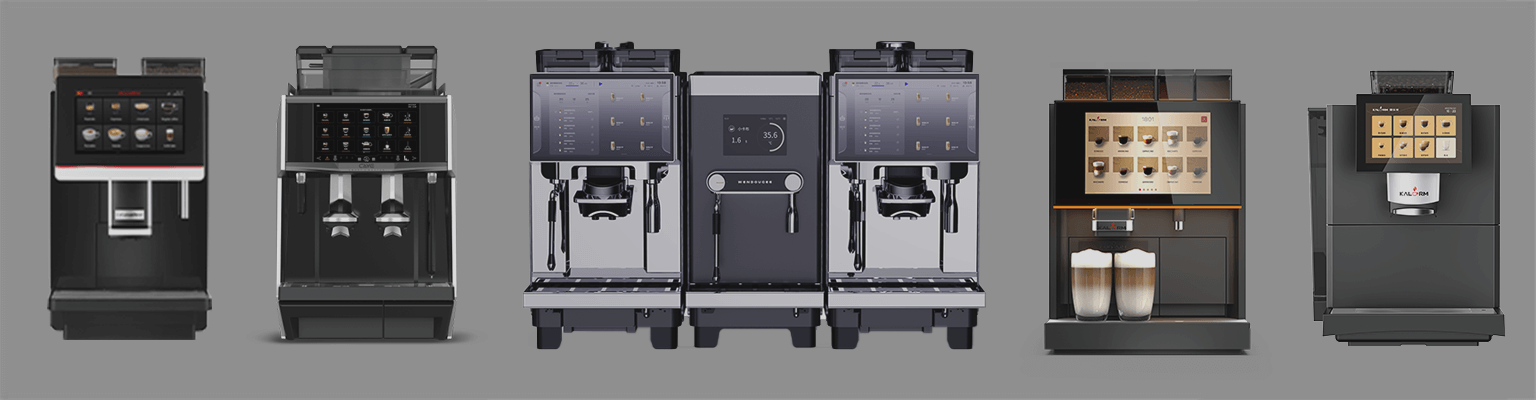
A kínai ipar a kávégépgyártásban – más szektorokhoz hasonlóan – napjainkban készül kitörni, vagy talán már ki is tört az „olcsó, ám gyenge minőségű” kategóriából. Erre példa az itt látható, 2025 nyarán bemutatott, Wendougee Lita elnevezésű félprofesszionális kávégép. A kiállított modell dual boileres, azaz külön kazánegység felel a kávékészítésért, illetve a gőzölésért. Rendelkezik precíz hőmérséklet-állítással (PID), továbbá különböző nyomásprofilok is beállíthatók rajta. Méreténél fogva a büfék és kisebb kávézók mellett akár egy otthoni konyhapulton is elfér. A kínai kávégépgyártás jelenlegi csúcsát képviselő cég alig több mint hat éve van jelen az iparágban, műszakilag azonban ugyanazt a szintet képviseli, mint a nagymúltú gyártók. Az igényes otthoni „home barista” közönség mellett a vállalat két-, sőt háromfejes, nagy vendégforgalmú kávézókat kiszolgálni képes gépeket, illetve őrlőket is gyárt – jellemzően az európai és amerikai gyártók árainál jóval olcsóbban, azoknál 25–30%-kal alacsonyabb áron. A következő évtizedben derül ki, vajon a nagy európai gyártók képesek-e innovációban és árazásban felvenni a versenyt a Kína jelentette kihívással, avagy gépeik végleg a múzeumokba, gyűjtőkhöz kerülnek, mint az ipari örökség korszakalkotó termékei.
“And the future…?”
The Chinese industry in coffee machine manufacturing, as with other sectors, is preparing to break out, or perhaps has already broken out of the „cheap but low-quality” category. An example of this is the semi-professional coffee machine called Wendougee Lita, introduced in the summer of 2025.
The exhibited model has a dual boiler, i.e. a separate boiler unit is responsible for making coffee and steaming. It has precise temperature adjustment (PID) and can be used to set different pressure profiles. Due to its size, it can fit on a home kitchen counter in addition to buffets and smaller cafes.
The company, which represents the current peak of Chinese coffee machine production, has been present in the industry for just over six years, but technically it represents the same level as the long-established manufacturers. In addition to the demanding home barista audience, the company also manufactures two- or even three-head machines and grinders capable of serving high-turnover cafes, typically much cheaper than the prices of European and American manufacturers, and at a price 25-30% lower than those of European and American manufacturers. The next decade will show whether the major European manufacturers will be able to compete with the challenge posed by China in terms of innovation and pricing, or whether their machines will end up in museums and collectors as epoch-making products of the industrial heritage.
PINCÉR (Rézsárga alkonyaton egy körúti kávéházban lármás csendélet, tükrökkel, hamis csillámokkal, gipsz-rózsákkal és emberfejekkel! Langyosat, föllel! Hordárt, a jobb sarokba! Szűrve, nélkül! Telefon, telefon! Jövök már! Itt az aszpirin! Öngyilkosjelöltek málnaszörpöt szopnak! Szalmaszálat hozzá, szalmaszálat! Az utolsó szalmaszálat! Gyorsan, mert betegnek lesz! Kutyanyelvet az íróknak! Irodalmi fölvágottat! És egy ötletet, egy ötletet! A pincér, akit régen ismerek, mint minden pincért, szintén ismer engem, mint mindenkit, akit egyetlenegyszer látott! Kapkodva beszélgetünk, amint elszalad asztalom mellett! Ötperces és félórás szünetekkel!)
– Tízéves korában azonban mi akart lenni, Dezső? – Pap. (Elrohan. Ezen én öt percig merengek kidülledt szemmel, míg kanalazgatom az aludttejemet. Átkiabálok hozzá.) Miért pap? – A bencésekhez jártam. – Aztán? – Aztán egy vendéglős, aki velünk szemben lakott Kőszegen, a Fő téren, azt mondta az apámnak, hogy majd odavesz maga mellé, vendéglőst csinál belőlem. – Hány éves? – Ötvenkilenc. (A főpincér odaszól: Micsoda ötvenkilenc?” és számolni akar.) – Hány éve van a szakmánál? – Negyvenhat. (A főpincér – számot hallván – ismét ránk tekint.) – Hol szolgált? – Abbázia, Germánia, Français, New York, Palermo, Miramare, Japán. (Mint egy globetrotter diadalmas állomásai.) – Meddig van munkában? – Napi tizenegy óra. -– Mennyit járhat kilométerekben? -– Könnyű kiszámítani. Egy óra alatt sétálva megtehetünk öt kilométert. -– Szóval ötvenöt kilométert naponta? -– De én futok is. – Sokszor körüljárhatta volna a világot. – Fő, hogy a lábunkat ápoljuk. Minden reggel a gőzbe megyek, kivágatom a tyúkszemeimet, a bőrkeményedéseimet, mint minden pincér, mielőtt üzletbe jön. Azért nem panaszkodom. Szép mesterség, érdekes. – Sok híres emberrel találkozott? – Ferenc Józsefet is kiszolgáltam Sopronban, az állomáson, egy hadgyakorlaton. Leült az öreg a szárnysegédével és maga rendelt. – Magyarul? – Ugyan kérem. „Ich bitte um ein Glas Cognac.” Lerchenfeldi dialektusban. Megitta, egy szót se szólt se a szárnysegédjéhez, se hozzám, aztán átnyújtott tíz forintot. Ady Endre is volt a vendégem. Az bort ivott. – Ki volt a leggavallérabb? – Egy prelátus, aki Ungváron mulatott, 1911-ben. Nem tudom, mi ütött hozzá, de az folyton tömött pénzzel. Ha megkérdezte, hogy hány óra, fiam, vagy hol a telefon, fiam, vagy hogy hanyadika van, fiam, minden alkalommal átnyújtott egy tízkoronás aranyat. Egy éjszaka százhatvan koronát kerestem rajta, aranyban. Áldott, bohém ember volt. – Maga nem az? – Van eszembe. Csak a családomnak élek. Itt a fiam arcképe, a menyasszonyával. (Büszkén és gyönyörködve mutatja.) Se kártya, se lóverseny. – Volt a háborúban? – Két évig tisztiszakácskodtam Boszniában. Aztán följelentettek, ki akartak küldeni a frontra. El is mentem Oroszországba, de az ezredem csakhamar visszasürgönyzött. Egy év múlva Olaszországba menesztettek, de onnan is visszasürgönyzött az ezredem. Tetszik tudni: a gyomor. Nagy úr az. Jól főztem. – Ismeri a vendégeit, akik itt ülnek? – Elég rájuk nézni, tudom, mi a pedigree-jük, mi van a fejükben meg a zsebükben. – Mutasson néhányat. – Hát például ott a sarokban az az úr, aki most jegeskávét eszik. Ez minden áldott nap bejön ide. Először is rendel két óriási kovászos uborkát, aztán tejbedarát, aztán jegeskávét, aztán dinnyét, aztán feketét, aztán egy bécsi szeletet. Pardon, megint hív. (Odaszalad.) – Az istenért, mit rendelt megint? – Főtt kukoricát. – Micsoda a foglalkozása? – Orvos. – Talán gyomorspecialista? – Nőgyógyász. – Az más. Akkor értem. – Amott pedig ül egy öregúr. Ez a potyázóvendég. Barnakávét kért habbal, lenyalta róla a habot, aztán panaszkodott, hogy nincs rajta elég hab. Hoztam neki. Erre nagyon barnának találta a kávét s tejet kért. „Javító” tejet. Máskor megfordítva csinálja. Világos kávét rendel és „javító” feketét kér. – Bliccelnek? – Ó kérem, a „bliccelő” vendég ártatlan. Megeszik hat zsömlyét és csak kettőt mond be. De ezt ismerjük. Olvasva kerül elé a sütemény. És nem is haragszik, ha csakugyan hat zsömlyét számítunk. Nem rosszból teszi. Csak nincs szíve bevallani. Mit mondjak még? Az „ellépő” vendég lassan indul. Kellő hangsúllyal, igen hangosan kell köszönni neki. „Jó napot kívánok, igazgató úr, alázatos szolgája, szerkesztő úr!” Mosolyogva eszmélnek föl, hogy még nem is fizettek. Mindig akad „száraz” vendég is, aki besurran, azt mondja, hogy „majd később”, a kályha mellett lapul meg és villámgyorsan elolvassa az összes újságokat. A „szélhámos” vendég külön lapra tartozik. Múlt héten is járt itt ilyen. Alaposan bevacsorázott, a székét az asztalhoz támasztotta, azzal, hogy mingyárt jön. Még a szemüvegét is itthagyta. Sohasem jött érte. – Van még vicces vendég? – Kihalt. Azelőtt azonban nekünk is viccelnünk kellett, megkívánták. Egy pohár vizet, de nedvesen. A vendég, mikor eléje tettük, ijedten mutatott rá, hogy a víz összefolyt. És atyámnak, vezéremnek, elnökömnek nevezett. Megkomolyodott, elsavanyodott a világ.
(Micsoda sokoldalúság, áttekintés, fürgeség a mozgásban és felfogásban s micsoda emberismeret. Hány regényíró van, aki dolgozószobájában felényire sem ismeri az embereket és hány világkörüli utazó, ki negyedennyit se látott a világból. A pincér, noha egy helyben topog egész életében, nem hiába koptatja lábát és cipőjét, messzire eljut, mindig újabb és újabb megismeréshez. Látja, hogy öregszenek meg a fiatal vendégek, hogy hullik ki foguk és hajuk, hogy boronálódnak össze a párok egy üveg pezsgőnél és hogy válnak szét, hogy jönnek létre a házasságok és hogy tárgyal a férj egy borús reggelen az ügyvédjével a válásról, sötét kávét rendelve, minden nélkül. Igazi bölcs. Bort hoz a mámornak s a csömörnek szódabikarbónát.)
DEZSŐ KOSZTOLÁNYI FROM THE CRADLE TO THE COFFIN
WAITER (At a copper-yellow dusk, in a café on the boulevard, a noisy still life, with mirrors, fake glitter, plaster roses and human heads! A lukewarm one with a skin! A porter in the right corner! Filtered, without! A phone call, a phone call! I’m coming! Here’s your aspirin! Suicide candidates are sipping raspberry syrup! A straw to it, a straw! The last straw! Quickly as it’s for a sick person! A slip of paper for the writers! Literary cold cuts! And an idea, an idea! The waiter I have known for a long time, like all waiters, also knows me, like everyone he has seen once. We talk hurriedly as he runs past my table. With five-minute and half-hour breaks,)
“But what did you want to be when you were ten, Dezső?” “A priest.” (He runs away. I ponder on this for five minutes with bulging eyes, while spooning my curdled milk. I shout over to him.) “Why a priest?” “I went to the Benedictines.” “And then?” “Then a restaurateur who lived opposite us in Kőszeg, on the Main Square, told my father that he would take me to his side and make me a restaurateur.” “How old are you?” “Fifty-nine.” (The head waiter says: How come fifty-nine?”, and wants to count.) “How many years have you been in the profession?” “Forty-six.” (The head waiter hearing the number looks at us again.) “Where did you serve?” “Opatija, Germania, Français, New York, Palermo, Miramare, Japan.” (Like the triumphant stages of a globetrotter.) “How long are you working?” “Eleven hours a day.” “How much can you walk in kilometres?” “It’s easy to calculate. Walking an hour, you can cover five kilometres.” “So fifty-five kilometres a day?” “But I also run.” “You could have travelled around the world many times.” “The main thing is to take care of our feet. Every morning I go to the steam, cut out my corns, my calluses, like all waiters before coming to the store. I’m not complaining though. Nice job, interesting.” “Have you met many famous people?” “I also served Francis Joseph in Sopron, at the station, at a military exercise. The old man sat down with his aide-de-camp and ordered himself.” “In Hungarian?” “Oh, come on.” “Ich bitte um ein Glas Cognac.” In the Lerchenfeld dialect. He drank it, didn’t say a word to his aide-de-camp or to me, and then handed me ten forints. Endre Ady was also my guest. He drank wine.” “Who was the most gallant?” “A prelate who was having fun in Uzhhorod in 1911. I don’t know what was wrong with him, but he kept stuffing me with money. If he asked me what time it was, son, or where the phone was, son, or what time it was, son, he would hand me a ten-crown piece of gold. I earned 160 crowns in gold on him every night. He was a blessed, bohemian man.” “Aren’t you?” “No way. I live only for my family. Here is the portrait of my son, with his fiancée. (He shows it proudly and delightedly.) No cards, no horse racing.” “Were you in the war?” “I worked as an officer’s chef in Bosnia for two years. Then someone reported me to send me to the front. I went to Russia, but my regiment soon telegraphed me back. A year later I was sent to Italy, but my regiment telegraphed back from there as well. You know, the stomach. It’s a powerful master. I cooked well.” “Do you know your guests who are sitting here?” “You only have to look at them, I know what their pedigree is, what is in their heads and pockets.” “Show me some.” “Well, for example, there’s the gentleman in the corner who is eating iced coffee right now. He comes in here every single day. First of all, he orders two giant pickled cucumbers, then milk semolina, then iced coffee, then melon, then black coffee, and then a Wiener schnitzel. Sorry, he’s calling again. (He runs over.) “For God’s sake, what did you order again?” “Boiled corn.” “What is your job?” “I’m a doctor.” “Maybe a stomach specialist?” “A gynaecologist.” “That’s different. Then I understand.” “And there’s an old gentleman sitting over there.” This is the free-riding guest. He asked for brown coffee with foam, licked the foam off it, and then complained that there wasn’t enough foam on it. I served him some. Then he found the coffee very brown and asked for milk. “Repairing” milk. At other times, he does it the other way around. He orders light coffee and asks for a “repair” black coffee. “Is there dine and dash?” “Oh please, dine and dash customers are innocent. They eat six rolls and only announce two. But we know that. They are served the cake when they are reading. And they are not angry if we really charge them six rolls. They don’t do it as a swindle. They just don’t have the heart to admit it. What else can I say? Some guests get started slowly. You have to greet him with the right emphasis, very loudly. “Good afternoon, Director, your humble servant, Editor!” They realize with a smile that they haven’t even paid yet. There is always a “dry” guest who sneaks in, says that “later”, he will hide next to the stove and read all the newspapers in a flash. The “impostor” guest is a different story. We had one just last week. He had a hearty dinner, leaning his chair against the table, saying that he would return. He even left his glasses behind. He never came back to pick them up. “Are there any other funny guests?” “They are extinct. But in the past, we also had to be funny as people wanted it. A glass of water, but make it wet. When we put him in front of him, the guest pointed out in fright that the water had flowed together. And he called me my father, my leader, my president. The world has become serious and sour.”
(What versatility, overview, agility in movement and perception, and what knowledge of human beings. How many novelists are there who do not know people at all in their study, and how many globetrotters who have not seen a quarter of the world. The waiter, although stuck in one place all his life, does not wear his feet and shoes in vain, he reaches far, always to get to know each other. He sees how young guests get older, how their teeth and hair fall out, how couples get together over a bottle of champagne and how they separate, how marriages take place, and how the husband negotiates with his lawyer about divorce on a gloomy morning, ordering dark coffee without anything. He is a real wise man He brings wine to the intoxication and baking soda to disgust.)
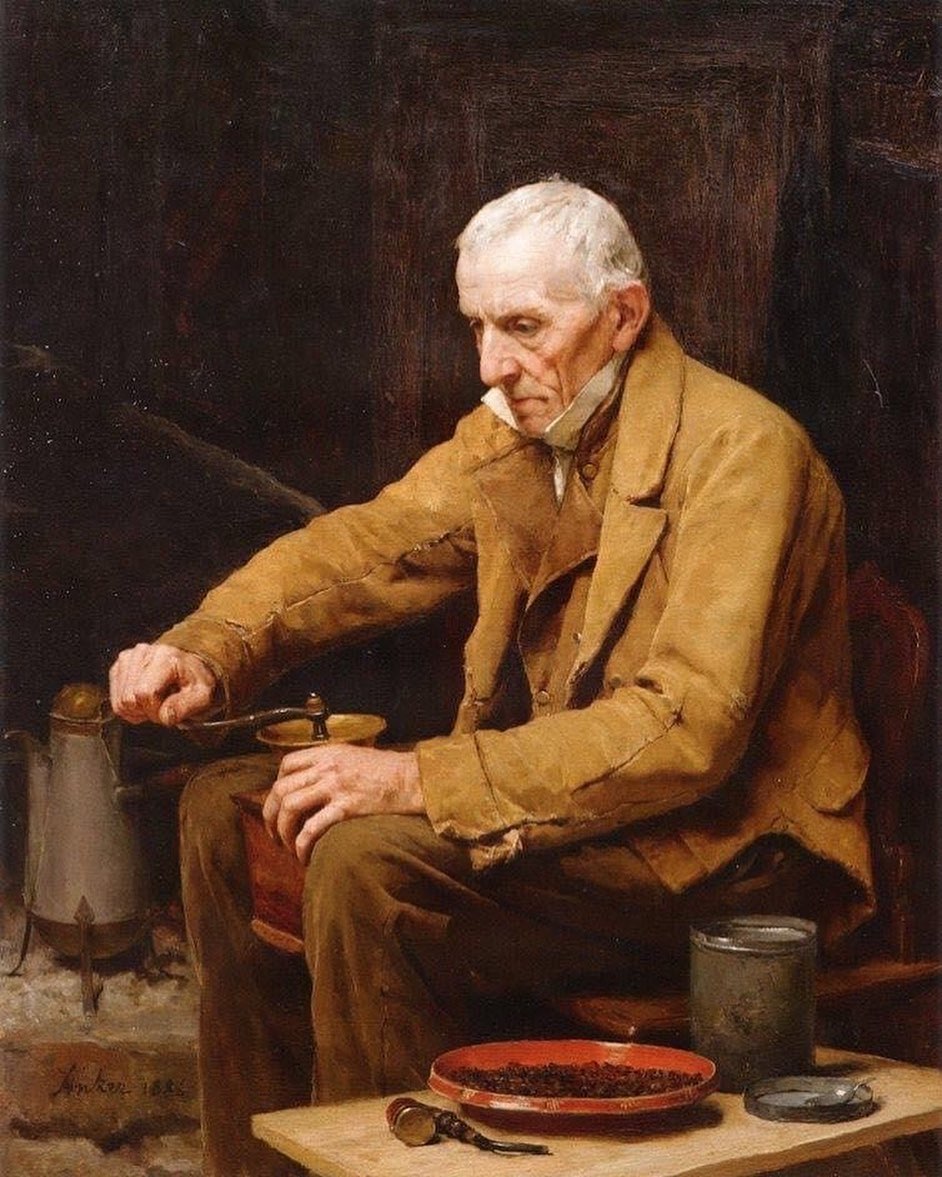
A legkorábbi időkben, nagyjából a 10–15. században, a kávébabot egyszerű mozsarakban zúzták össze, sokszor különféle fűszerekkel együtt. Az így kapott őrlemény szemcséi nagyon eltérő méretűek voltak, ami ugyan befolyásolta az ital ízét, de ekkor még nem beszélhetünk tudatos minőségellenőrzésről. Ahogy a kávé egyre szélesebb körben vált ismertté a 15–16. században, főként az Oszmán Birodalomban és később Európában, megjelentek az első kézi hajtású őrlők. Ezek már jóval egyenletesebb őrleményt biztosítottak, ami különösen a török kávé elkészítésénél volt fontos. A 19. század ipari fejlődése jelentős változást hozott: elterjedtek a mechanikus, acélkésekkel működő őrlők, amelyekkel nagyobb mennyiségű kávét lehetett gyorsan és megbízható minőségben feldolgozni. Ez nagyban hozzájárult a kávé tömeges kereskedelmi elterjedéséhez. A 20. században az elektromos őrlők megjelenése, valamint a szemcseméret pontos állíthatósága új távlatokat nyitott mind az otthoni, mind a vendéglátóipari kávékészítésben. Napjainkban a profi kávéőrlést a precizitás, az állandóság és a technológiai fejlettség jellemzi, miközben nagy figyelmet kap az őrlemény frissessége és az őrlés során keletkező hő kontrollálása is. A modern őrlők tervezésénél kiemelt szempont az egységes szemcseméret elérése, mivel ez alapvetően meghatározza az extrakció egyenletességét és az ízek tisztaságát. A szakmai környezetben szinte kizárólag őrlőköves megoldásokat használnak – legyen szó lapos vagy kúpos kövekről –, mivel ezek csökkentik a túlzottan finom szemcsék arányát és mérséklik a csatornásodás esélyét. Így tehát a víz a kávépogácsán egyenletesen, nem pedig a kialakuló „csatornákon” át folyik, ami egyenletes kivonatolást és a kiegyensúlyozott ízeket eredményez.
The history of coffee grinding
In the earliest times, roughly between the 10th and 15th centuries, coffee beans were crushed in simple mortars, often accompanied by various spices. The grains of the resulting grind were very different in size, which affected the taste of the drink, but at that time this was not conscious quality control. As coffee became more widely known in the 15th and 16th centuries, mainly in the Ottoman Empire and later in Europe, the first hand-driven grinders appeared. These already provided a much more uniform grind, which was especially important when making Turkish coffee.
The industrial development of the 19th century brought about a significant change: mechanical grinders with steel knives became widespread, which could be used to process larger quantities of coffee quickly and with reliable quality. This greatly contributed to the mass commercial spread of coffee. In the 20th century, the appearance of electric grinders and the precise adjustment of the grain size opened up new horizons in both home and catering coffee making. Nowadays, professional coffee grinding is characterized by precision, consistency and technological advancement, while great attention is also paid to the freshness of the grind and the control of the heat generated during grinding. When designing modern grinders, achieving a uniform grain size is a key consideration, as this fundamentally determines the uniformity of extraction and the purity of the flavours. In professional settings, grindstone solutions are used almost exclusively, whether flat or conical stones, as they reduce the proportion of excessively fine particles and reduce the chance of channel formation. Thus, the water flows evenly through the coffee grounds rather than through the „channels” that form, resulting in uniform extraction and balanced flavours.
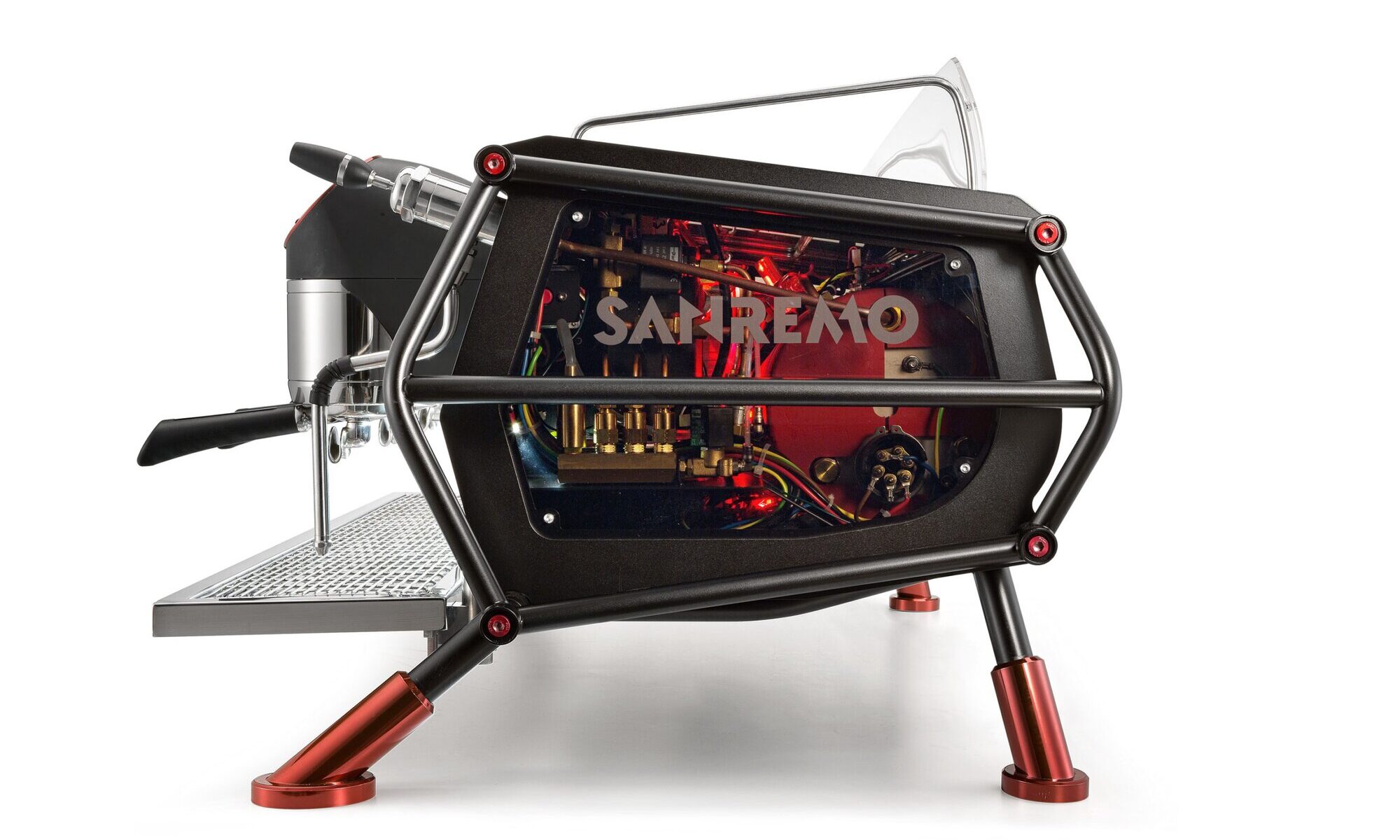
A Sanremo Café Racer egy prémium motorok ihlette eszpresszógép, amely ötvözi a merész dizájnt a csúcsminőségű mérnöki megoldásokkal, amelyek mind a kontrollt, az erőt és a megbízhatóságot szolgálják a csúcsidőszakokban. A többkazános rendszer, a precíz volumetrikus adagolás és az ergonomikus kialakítás miatt a baristák rendkívül szeretik, mivel gyorsabbá és hatékonyabbá teszi a munkát, miközben a gép mindig konzisztens minőséget biztosít. A Café Racer egyszerre stílusos és teljesítményorientált gép, valódi erőmű a pult mögött.
Főbb jellemzők: volumetrikus, többkazános rendszer: külön kazán a főzéshez és a gőzöléshez az állandó hőmérséklet és hatékonyság érdekében.
Célközönség: Kávézók és baristák, akik gyorsan készülő, magas minőségű eszpresszót igényelnek. Egyedi dizájnelemek: A minimalista acél exoskeleton nyers, mechanikus esztétikát ad, ami egyben a karbantartást, a szellőzést és a hozzáférést is segíti. Kiemelt dizájnelemek: a nyitott vázszerkezet javítja a karbantartást és a levegőáramlást.
Integrált LED-világítás: jobb látási viszonyok, hangulatos környezet. Kompakt, kiegyensúlyozott méretek: illeszkedik akár a kisebb pultokhoz is. Könnyen hozzáférhető panelek: szerszám nélkül nyithatóak a belső ellenőrzéshez.
Testreszabási lehetőségek A Café Racer vizuális élményt nyújt és testreszabható a helyi igényeknek megfelelően.
Oldalpanelek: fém, fa, hálós vagy teljes színválaszték. Logó-integráció: matricák vagy gravírozott logók. Színválaszték: matt fekete, fényes fehér, tűzpiros, stb. Limitált kiadások: például versenyszínes vagy eco kiadások.
Dizájn és praktikusság
A gép széles csoportfejekkel rendelkezik, így több barista dolgozhat egyszerre, miközben a hátrafelé néző shot időzítőknek köszönhetően mindenki folyamatosan láthatja az extrakció idejét. Az alacsony tálca lehetővé teszi a magas poharak használatát, a könnyen elérhető gőzkarok és vezérlők pedig kényelmes munkavégzést biztosítanak. Emellett az állítható pohártartó rendszer különböző csészékhez igazítható, így még rugalmasabbá teszi a kávékészítést.
Műszaki adatok Volumetrikus, többkazános rendszer: Független csoportkazánok (0,8 l/csoport). Külön gőzkazán (8 l) a folyamatos tejhabosításhoz. PID hőmérséklet-szabályozás ±0,1°C pontossággal. Volumetrikus adagolás: pontos vízadag minden lökethez. Flowactive rendszer: finom előáztatás kontrollált vízáramlással. Prémium anyagok: AISI 316 és 316L acél a tartósság érdekében.
Főbb műszaki specifikációk (háromcsoportos modell): Teljesítmény: max. 7300W A gőzkazán kapacitása: 8 l A csoportkazán kapacitása: 0,8 l/csoport Méretek: 877x538x600 mm Súly: kb. 97 kg Energiatakarékos: 20%-kal alacsonyabb a fogyasztása a hagyományos gépeknél.
Speciális funkciók Nyomásprofilozás valós időben. Érintőképernyős vezérlés, programozható löketek. Eco mód, USB és WiFi modul (opcionális). Shot timer + brew ratio követés.
Teljesítmény és funkcionalitás Stabil löketek a magas forgalom mellett. Kettős gőzkar, nagy teljesítmény.
Gyors visszaállás az ismételt használathoz. Workflow-optimalizált elrendezés a gyors kiszolgáláshoz.
Felhasználói felület Érintőképernyő valós idejű visszajelzéssel. Csoportfejenként programozható hőmérséklet. Intuitív menürendszer. Programozható volumetrikus gombok. LED-világítás a kezelőfelületen. PID hőmérséklet-szabályozás.
Karbantartás és tartósság Tartós rozsdamentes acélváz. Moduláris alkatrészek könnyű hozzáféréssel. Öndiagnosztika és tisztítási emlékeztetők. Szerszám nélküli napi karbantartás. Beépített vízszűrő kompatibilitás. Megerősített kazánszigetelés és tömítések.
Sanremo Café Racer
Volumetric multi-boiler espresso machine
The Sanremo Café Racer is an espresso machine inspired by premium engines that combines bold design with high-end engineering solutions that all provide control, power and reliability during peak periods. The multi-boiler system, precise volumetric dispensing and ergonomic design make it extremely popular with baristas as it makes the work faster and more efficient, while the machine always ensures consistent quality. The Café Racer is both a stylish and performance-oriented machine, a real powerhouse behind the counter.
Key features: volumetric, multi-boiler system: separate boiler for brewing and steaming for constant temperature and efficiency
Target audience: Cafes and baristas who require fast-brewing, high-quality espresso. Unique design elements: The minimalist steel exoskeleton adds a raw, mechanical aesthetic that also aids in maintenance, ventilation, and access. Highlights of the design: the open frame structure improves maintenance and airflow.
Integrated LED lighting: better visibility, cozy environment. Compact, balanced dimensions: fits even smaller counters. Easily accessible panels: can be opened without tools for internal inspection.
Customization options Café Racer provides a visual experience and can be customized according to local needs.
Side panels: metal, wood, mesh or full colour options. Logo integration: stickers or engraved logos. Colour options: matte black, glossy white, fiery red, etc. Limited editions: for example, competitive or eco editions.
Design and practicality
The machine has wide group heads so that multiple baristas can work at the same time, while everyone can see the extraction time at all times thanks to the rear-facing shot timers. The low tray allows you to use tall glasses, and the easily accessible steam levers and controls ensure comfortable working. In addition, the adjustable cup holder system can be adapted to different cups, making coffee even more flexible.
Technical parameters: Volumetric multi-boiler system: Independent group boilers (0.8 l/group). Separate steam boiler (8 l) for continuous milk frothing. PID temperature control with an accuracy of ±0.1°C. Volumetric dosing: precise water dosage for each stroke. Flowactive system: delicate pre-soaking with controlled water flow. Premium materials: AISI 316 and 316L steel for durability.
Main technical specifications (three-group model): Power: up to 7300W Steam boiler capacity: 8 l Group boiler capacity: 0.8 l/group Dimensions: 877x538x600 mm Weight: approx. 97 kg Energy saving: 20% lower consumption than conventional machines.
Advanced features Pressure profiling in real time. Touchscreen control, programmable strokes. Eco mode, USB and WiFi module (optional). Shot timer + brew ratio tracking.
Performance and functionality Stable strokes with high turnover. Dual steam lever, high performance.
Quick return to reuse. Workflow-optimized layout for fast service.
User Interface Touch screen with real-time feedback. Programmable temperature in each group head. Intuitive menu system. Programmable volumetric buttons. LED lighting on the control panel. PID temperature control.
Maintenance and durability Durable stainless steel frame. Modular components with easy access. Self-diagnosis and cleaning reminders. Tool-free daily maintenance. Built-in water filter compatibility. Reinforced boiler insulation and seals.
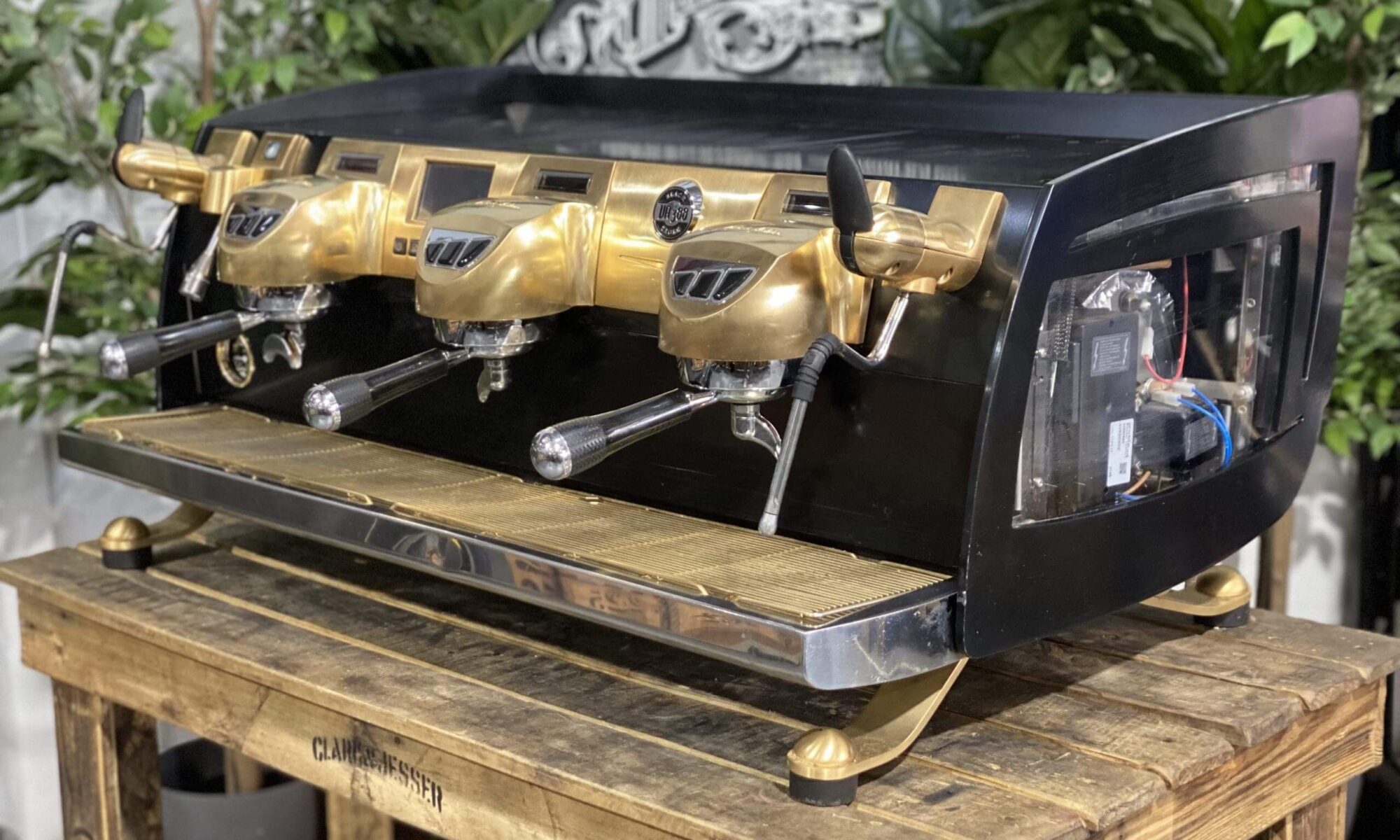
A hőcserélős kazánkialakítás hosszú ideig meghatározó volt az eszpresszógépek fejlődésében, napjainkra azonban egyre inkább a kétkazános rendszerek vették át a szerepét. Ebben a felépítésben a kávékészítéshez egy külön kazán szolgál, amely már eleve az eszpresszó főzéséhez ideális, alacsonyabb hőmérsékletű vizet tartalmaz (jellemzően körülbelül 92°C). A második kazán kizárólag a tejgőzöléshez szükséges gőzt biztosítja, és vízszintérzékelő elektronikája automatikusan pótolja az elgőzölt vizet. A kétkazános rendszer professzionális alkalmazásában meghatározó szerepet játszott Giuseppe Bambi, a firenzei La Marzocco társalapítója. A vállalat 1970-ben mutatta be a GS (Gruppo Saturo) sorozatot, amely az első, ipari környezetben is megbízhatóan működő, kétkazános eszpresszógép-széria volt. A konstrukció külön kazánt alkalmazott a kávéfőzéshez és a gőz előállításához, ami jelentős előrelépést jelentett a hőmérséklet-stabilitás és az egyidejű munkavégzés terén. Ez a megoldás megalapozta a modern, hőstabil, nagy terhelésre tervezett eszpresszógépek felépítését, és a későbbi high-end gépek egyik alapelvévé vált. A hőmérséklet-szabályozás terén jelentős előrelépést hozott, hogy a korábban alkalmazott bimetál termosztátokat és a membrános nyomáskapcsolókat felváltotta a PID-szabályozás. Az előző megoldások csak viszonylag nagy hőingadozással voltak képesek tartani a beállított hőfokot, hosszabb idejű ki- és bekapcsolásokkal. Ezzel szemben a PID-szabályozás célja, hogy a kívánt hőmérsékletet a lehető leggyorsabban elérje, majd azt minimális eltéréssel tartsa fenn, akár milliszekundumos pontosságú, folyamatos teljesítményszabályozással.
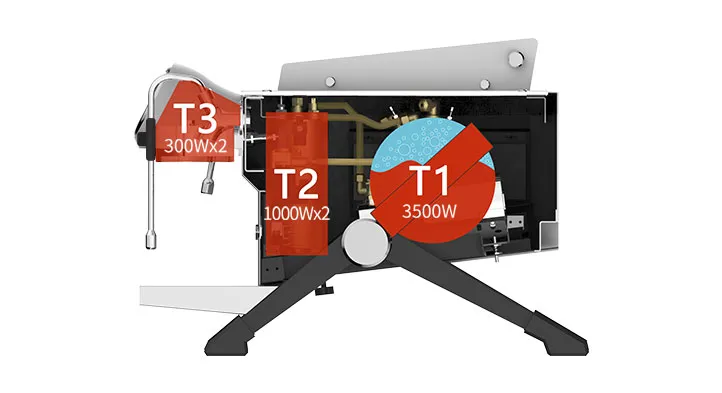
E két technológia továbbfejlesztett ötvözete a T3-rendszer, amely a gőzkazán és a kávékazán mellett a főzőfej különálló, precíziós fűtését is magában foglalja. Ez a megoldás a teljes főzési folyamat során kiemelkedő hőmérséklet-stabilitást és pontosságot biztosít. Az előző generációs gépeknél mérföldkőnek számított a stabil, 9 bar nyomás előállítása. A technológia fejlődésével azonban a gyártók és felhasználók felismerték, hogy az egyenletes kivonatolás tovább javítható, ha a főzési folyamat különböző szakaszaihoz eltérő nyomásértékeket alkalmaznak. Ezt a megközelítést nyomásprofilozásnak nevezzük. A flow-profilozás (áramlásprofilozás) a nyomásprofilozáshoz hasonló megközelítés, azonban míg a nyomásprofilozás során a gép előre meghatározott nyomásértékeket követ, addig a flow-profilozás esetén a gép a vízáramot szabályozza, és a nyomás a kávépogácsa aktuális hidraulikai ellenállásának megfelelően alakul. Ennek a megközelítésnek az előnye, hogy a kávékészítés időtartama és a kivonat mennyisége sokkal egyenletesebb marad, még akkor is, ha a darálás finomsága, a tömörítés mértéke vagy a gép hőmérséklete változik a mindennapi használat során. A gép folyamatosan méri az átfolyó víz mennyiségét, és ennek megfelelően szabályozza a nyomást, így a kávépogácsa ellenállásában bekövetkező eltérések nem okoznak jelentős változást a kivonatolásban és az ízben. A flow-profilozás emellett segít a csatornásodás csökkentésében is. Amikor a víz könnyebb utat talál a kávépogácsán belül, a kialakuló csatorna fokozza a helyi áramlást, ami túlkivonatoláshoz és a csatorna további növekedéséhez vezethet. Ilyen esetekben a flow-profilozást alkalmazó gép automatikusan csökkenti a nyomást annak érdekében, hogy az áramlás egyenletesebb maradjon. Ez mérsékli a csatorna kialakulását, és bizonyos esetekben lehetővé teszi, hogy a kávépogácsa szemcséi részben visszarendeződjenek a keletkezett résekbe, csökkentve a jelenség hatását. Összességében a flow-profilozás olyan egyenletes, kiszámítható kivonatolást eredményez, amely kevésbé érzékeny a kávépogácsa minőségében vagy a gépi beállításokban előforduló kisebb eltérésekre, így stabilabb és kiegyensúlyozottabb ízélményt biztosít.
A T3 rendszer vázlatos ábrázolása. A schematic representation of the T3 system. / ricco.com
A következő szakaszban, az úgynevezett ramp-up során a gép fokozatosan növeli a nyomást a kívánt csúcsértékig – általában 8–9 barra –, lehetővé téve a kávé kedvező íz- és illatanyagainak kiegyensúlyozott kivonását. A csapolás végén alkalmazott ramp-down, vagyis a fokozatos nyomáscsökkentés megakadályozza a túlzottan keserű, durva ízanyagok gyors kioldódását, így harmonikusabb, édesebb végeredményt biztosít. A korai elektronikus eszpresszógépek a kivonatolás hosszát jellemzően átfolyásmérővel szabályozták. Az elektronika a pumpából kifolyó víz mennyiségét mérte, és akkor állította le a csapolást, amikor az előre beállított térfogat átfolyt a mérőn. Ez a módszer azonban nem minden esetben adott pontos eredményt, mivel a csészébe kerülő ital mennyiségét számos tényező befolyásolja, például az őrlemény finomsága, a kávé típusa, pörkölése, frissessége vagy a kávépogácsa tömörítése.
A modern eszpresszógépekben ezt a megoldást egyre inkább felváltja a gravimetrikus adagolás, amelynél egy beépített precíziós mérleg méri a csészében lévő ital tömegét a csapolás során. A gép automatikusan leállítja a folyamatot, amint eléri az előre meghatározott súlyt, így a változó körülmények ellenére is pontosabb és jól reprodukálható eredmény érhető el. A mai presszógépekben számos további fejlesztés is megjelenik, mint például a kazánok egyre hatékonyabb hőszigetelése, az automatikus tejgőzölés indítása és leállítása, a precíziós szenzorok alkalmazása, vagy a különböző bevonattal ellátott szűrők, amelyek megkönnyítik a tisztítást. Egyes rendszerek már azt is lehetővé teszik, hogy a felhasználók digitálisan megosszák egymással saját nyomásprofiljaikat, ez új távlatokat nyit a (kísérleti) eszpresszókészítésben és a tudásmegosztásában.
A kétkazános és a hőcserélős technológia A hőcserélős eszpresszógépek egy nagy bojlerrel rendelkeznek, amelyet gőzhőmérsékleten tartanak, és egy hőcserélő tekercs fut keresztül rajta. A friss víz ezen a tekercsen áthaladva éri el a főzéshez ideális hőmérsékletet, mire a csoportfejhez ér. Ez a kialakítás lehetővé teszi a párhuzamos főzést és gőzölést egyetlen bojlerrel, ami kisebb kávézókban és kezdő üzemeltetők számára előnyös. A hőcserélős rendszerek előnyei közé tartozik a költséghatékonyság, hiszen általában 20–40%-kal olcsóbbak a dupla bojleres gépeknél, továbbá jellemző még a gyors felmelegedés és a kompakt kialakítás is. Kevesebb alkatrészük miatt a karbantartási igény is alacsonyabb. Ugyanakkor nagy forgalom esetén a főzővíz hőmérséklete ingadozhat, a folyamatos gőzhasználat lassíthatja a hőmérséklet visszaállását, és korlátozott a finomhangolás lehetősége. A dupla bojleres gépek két külön bojlerrel rendelkeznek: egy a főzéshez (1–3 liter), és egy a gőz előállításához (5–20 liter). Mindkét bojler függetlenül tartja a hőmérsékletet, ez biztosítja a precíz szabályozást és a stabil hőmérsékletet mindkét funkcióhoz. A dupla bojler előnyei a kiemelkedő hőmérséklet-stabilitás, a programozható főzési hőmérséklet és a nagy volumenű teljesítmény. A külön hőmérséklet-beállítás lehetővé teszi a különleges kávék és szezonális keverékek pontos elkészítését, így a rendszer ideális specialty kávézók számára. Hátránya a magasabb kezdeti beruházás, a nagyobb energiafogyasztás, a bonyolultabb karbantartás, a hosszabb felmelegedési idő és a nagyobb helyigény.
Igényekre szabott választás A hőcserélős gépek alkalmasak közepes forgalomhoz (100–200 ital/nap), költségtudatos üzemeltetőknek, míg a dupla bojler nagy forgalmú kávézókban (200-nál több ital/nap) és specialty műveleteknél biztosítja a legjobb stabilitást és konzisztenciát. Mindkét rendszer megfelelő a képzett baristáknak, de a dupla bojler mindig kiegyensúlyozottabb hőmérsékletet és reprodukálható eredményt biztosít. A választás során a mennyiség, a minőségi elvárások, a költségvetés, a növekedési tervek és a személyzet képzettsége határozza meg, melyik rendszer a legmegfelelőbb. A hőcserélő kisebb beruházással, kompakt mérettel és egyszerű karbantartással kínál jó megoldást, míg a dupla bojler a nagyobb volumen és a kiemelkedő minőség eléréséhez ajánlott, hosszabb távon megtérülő befektetés.
Today’s modern espresso machines
For a long time, the heat exchanger boiler design was decisive in the development of espresso machines, but nowadays it has increasingly been taken over by dual-boiler systems. In this design, a separate boiler is used for making coffee, which already contains water at a lower temperature (typically around 92°C), which is already ideal for brewing espresso. The second boiler provides only the steam needed for milk steaming and its water level sensing electronics automatically replenish the evaporated water. Giuseppe Bambi, co-founder of La Marzocco in Florence, played a key role in the professional application of the dual-boiler system. In 1970, the company introduced the GS (Gruppo Saturo) series, the first of dual-boiler espresso machines that could work reliably in industrial environments. The design used a separate boiler for brewing coffee and producing steam, which was a significant improvement in temperature stability and simultaneous work. This solution laid the foundation for the construction of modern, heat-stable espresso machines designed for heavy loads, and became a basic principle of later high-end machines. In the field of temperature control, the bimetallic thermostats and diaphragm pressure switches have been replaced by PID control. The previous solutions were only able to maintain the set temperature with relatively large temperature fluctuations, with longer on/off switches. In contrast, PID control aims to reach the desired temperature as quickly as possible and then maintain it with minimum deviation, with continuous power control with an accuracy of up to milliseconds.
An improved combination of these two technologies is the T3 system, which includes separate, precision heating of the brew head in addition to the steam boiler and coffee boiler. This solution provides outstanding temperature stability and accuracy throughout the entire brewing process. The production of a stable pressure of 9 bar was a milestone for the previous generation of machines. However, as technology has advanced, manufacturers and users have realized that uniform extraction can be further improved by applying different pressure values to different stages of the brewing process. This approach is called pressure profiling. Flow profiling is a similar approach to pressure profiling, but while the latter involves a machine that follows predefined pressure values, flow profiling controls the flow of water and the pressure is adjusted according to the current hydraulic resistance of the coffee puck. The advantage of this approach is that the coffee preparation time and the amount of extract remain much more consistent, even if the fineness of the grind, the degree of compression or the temperature of the machine change during everyday use. The machine continuously measures the amount of water flowing through and regulates the pressure accordingly, so that any deviations in the resistance of the coffee grounds do not cause significant changes in extraction and taste.
Flow profiling also helps to reduce channel formation. When water finds an easier path within the coffee puck, the resulting channel increases local flow, which can lead to over-extraction and further expansion of the channel. In such cases, the machine using flow profiling automatically reduces the pressure in order to keep the flow more even. This reduces channel formation and, in some cases, allows the coffee grounds to partially rearrange into the resulting gaps, reducing the effect of the phenomenon.
Overall, flow profiling results in a smooth, predictable extraction that is less susceptible to minor variations in the quality of the coffee puck or machine settings, providing a more stable and balanced taste experience. In the next stage called ramp-up, the machine gradually increases the pressure to the desired peak value, usually 8 to 9 bar, allowing for a balanced extraction of the coffee’s beneficial flavours and aromas. The ramp-down applied at the end of tapping, i.e. gradual pressure reduction, prevents the rapid dissolution of excessively bitter, harsh flavours, thus providing a more harmonious and sweeter end result. Early electronic espresso machines typically controlled the length of extraction with a flow meter. The electronics measured the amount of water flowing out of the pump and stopped tapping when the preset volume flowed through the meter. However, this method did not always give an accurate result, as the amount of drink in the cup is influenced by many factors, such as the fineness of the grind, the type of coffee, its roasting, freshness or the compression of the coffee puck. In modern espresso machines, this solution is increasingly replaced by gravimetric dispensing, in which a built-in precision scale measures the weight of the beverage in the cup during tapping. The machine automatically stops the process as soon as it reaches a predetermined weight, so that a more accurate and reproducible result can be achieved despite changing conditions. Today’s espresso machines also feature a number of improvements, such as the increasingly efficient thermal insulation of boilers, the start and stop of automatic milk steaming, the use of precision sensors, or filters with different coatings that make cleaning easier. Some systems even allow users to digitally share their own pressure profiles with each other, opening up new horizons in (experimental) espresso production and knowledge sharing.
Dual-boiler and heat exchanger technology today Heat exchanger espresso machines have a large boiler that is kept at steam temperature and a heat exchanger coil runs through it. Fresh water passes through this coil to reach the ideal temperature for cooking by the time it reaches the group head. This design allows parallel brewing and steaming with a single boiler, which is beneficial for small cafes and novice operators. The advantages of heat exchanger systems include cost-effectiveness, as they are usually 20-40% cheaper than dual-boiler machines, as well as fast heating and compact design. Due to their fewer parts, the need for maintenance is also lower. At the same time, in the case of a high turnover, the temperature of the brewing water can fluctuate, the continuous use of steam can slow down the temperature reset, and the possibility of fine-tuning is limited. Dual-boiler machines have two separate boilers: one for brewing (1-3 litres) and one for steam production (5-20 litres). Both boilers maintain the temperature independently, ensuring precise control and a stable temperature for both functions.
The advantages of a dual-boiler are outstanding temperature stability, programmable brewing temperatures, and high-volume performance. A separate temperature setting allows for precise preparation of specialty coffees and seasonal blends, making the system ideal for specialty coffee shops. The disadvantages include a higher initial investment, higher energy consumption, more complex maintenance, longer warm-up time, and larger space requirement.
Tailor-made choice Heat exchanger machines are suitable for medium turnover (100-200 drinks/day) for cost-conscious operators, while the dual-boiler provides the best stability and consistency in high-turnover cafes (more than 200 drinks/day) and specialty operations. Both systems are suitable for skilled baristas, but a dual-boiler will always provide a more balanced temperature and reproducible results. When choosing, quantity, quality expectations, budget, growth plans and staff training will determine which system is best suited. The heat exchanger offers a good solution with a smaller investment, compact size and easy maintenance, while the dual-boiler is a recommended investment that pays off in the long run to achieve higher volume and outstanding quality
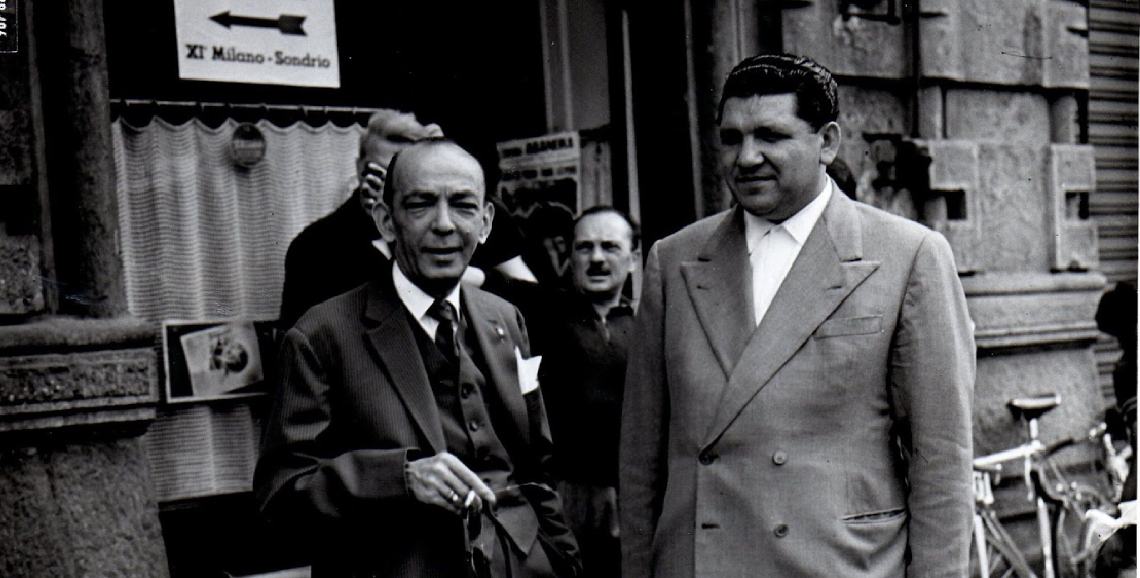
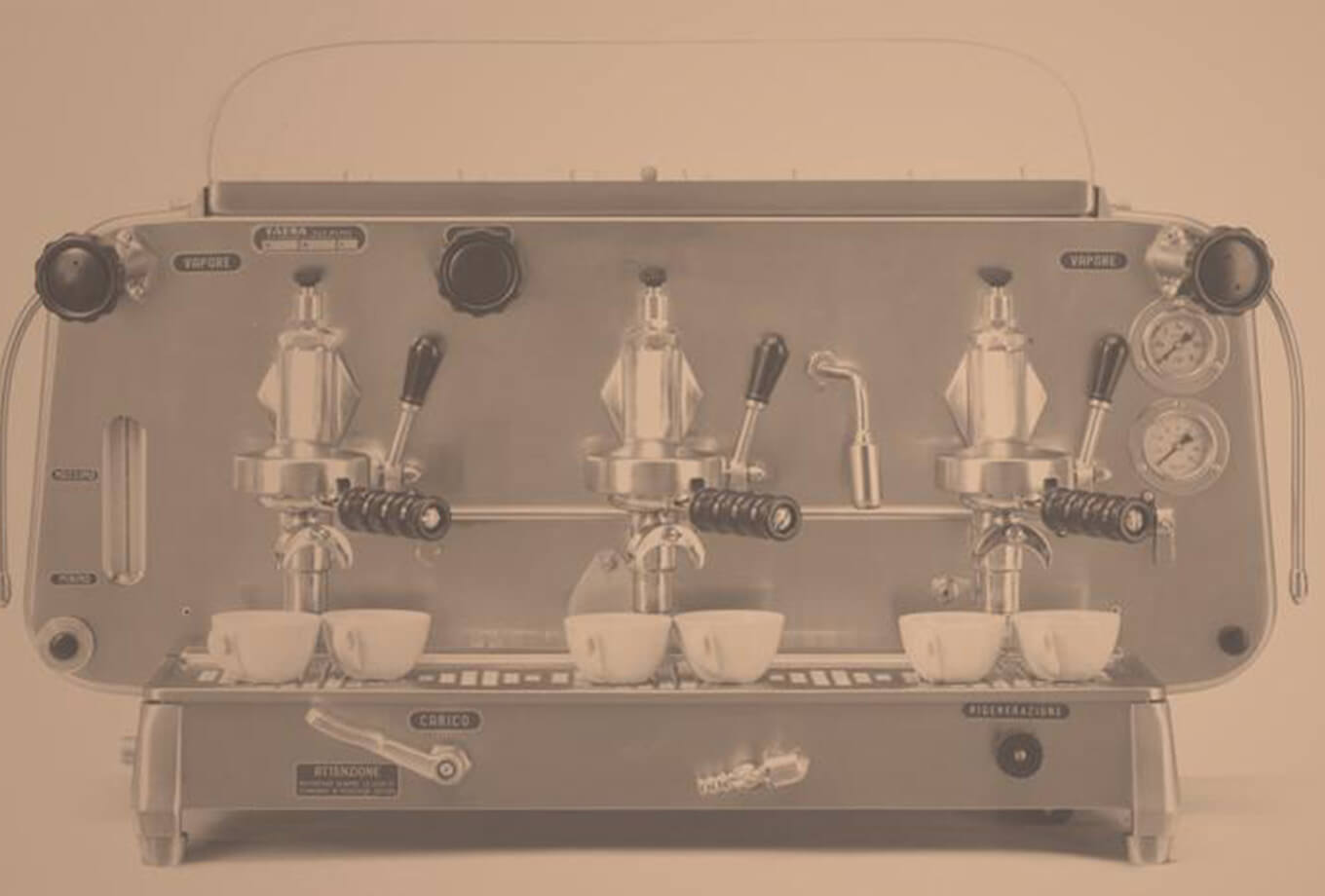
Az 1961-ben bemutatott Faema E61-es eszpresszógép, amelyet Ernesto Valente tervezett, mérföldkőnek számít az eszpresszókészítés történetében.
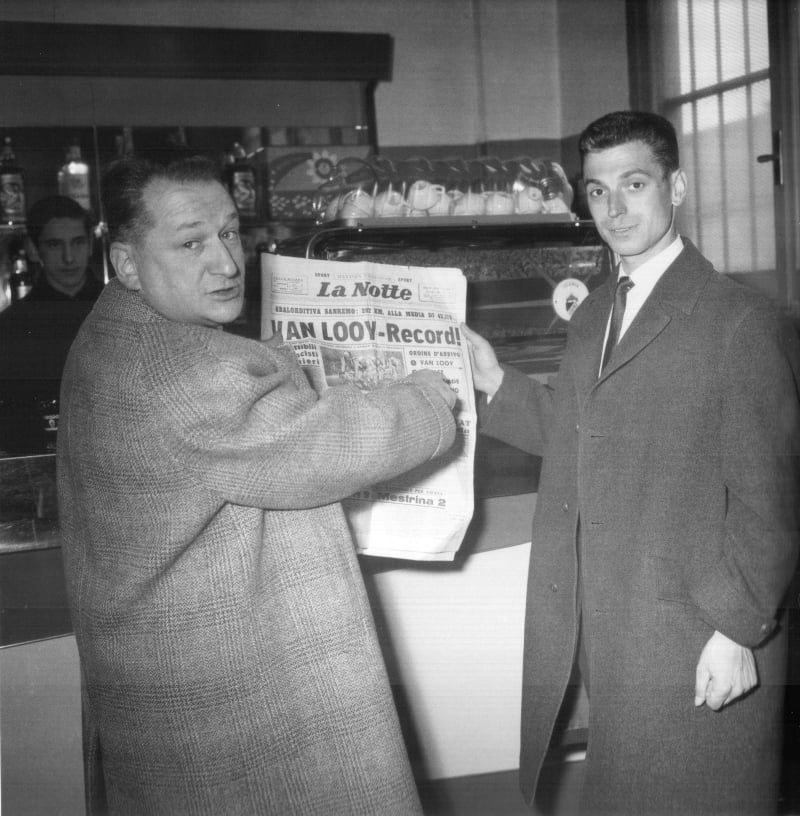
Ernesto Valente egyik ritka fényképe a kerékpáros világbajnok Rik Van Looy társaságában, 1958-ban. One of the rare photographs of Ernesto Valente with cycling world champion Rik Van Looy, in 1958. / thaiyencafe
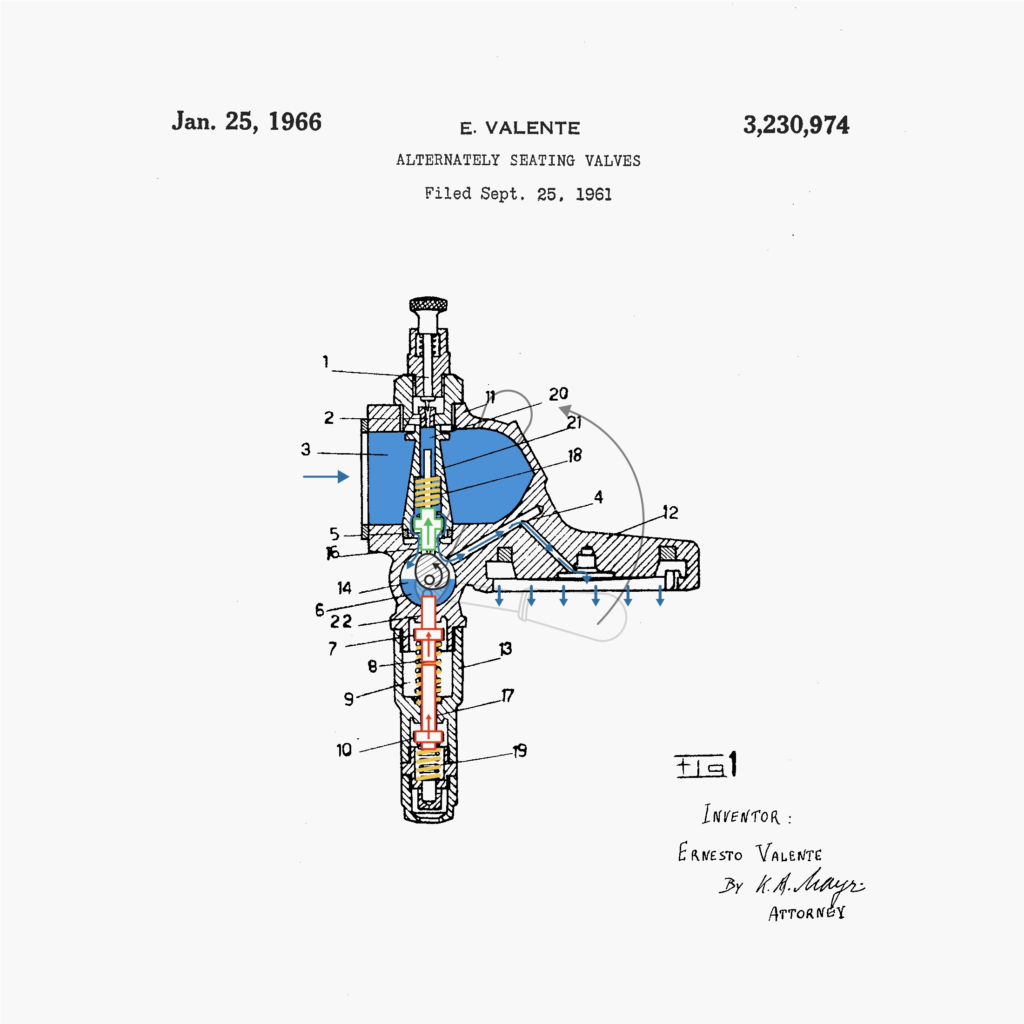
Hatalmas sikere több, egymással összefüggő műszaki újításnak volt köszönhető, amelyek alapjaiban változtatták meg a kávégépek működését. Az E61 esetében egy horizontálisan elhelyezett, hőcserélős kazánt alkalmaztak. A hőcserélő egy kisebb, a fő kazánon áthaladó „belső kazánt” jelent, amelyben a kávékészítéshez használt víz található. A nagy kazánban lévő, nyomás alatt álló túlfűtött víz (megközelítőleg 118°C) hővezetés útján melegíti fel a hőcserélőben lévő vizet. Ez a víz folyamatosan kering a nagy tömegű – mintegy 4 kilogrammos – főzőfejben, így stabilizálható a gép főzési hőmérséklete. A keringés nem külső szivattyú segítségével történik, hanem természetes fizikai elven, hasonlóan a korábbi, radiátoros fatüzelésű fűtési rendszerekhez. Ezt Magyarországon etázs- vagy gravitációs fűtésnek nevezték.
A folyamat során a melegebb, kisebb sűrűségű víz a főzőfejbe áramlik, ahol hőt ad le a környező levegőnek, majd lehűl. A nagyobb sűrűségű hidegebb víz lesüllyed, és az alsó csövön keresztül visszatér a hőcserélő aljába. Ez az állandó körkörös áramlás folyamatosan meleg vizet juttat a főzőfejbe, így biztosítja annak stabil hőmérsékletét. Amikor a barista megkezdi az eszpresszó készítését, friss, hideg vizet pumpál a hőcserélő alsó részébe, majd kinyitja a főzőfej manuális szelepét. A víz ekkor a hőcserélő mindkét oldaláról a főzőfej felé áramlik, ahol a hidegebb és melegebb víz összekeveredik. A főzőfej nagy hőtároló tömege kiegyenlíti a hőmérsékletet, így a kávé készítése során állandó hőmérsékletű víz jut a kávéra. A hőcserélős technológia további előnye, hogy egyetlen gépen belül megoldhatóvá vált a kávéfőzéshez ideális hőmérsékletű víz és a tejhabosításhoz szükséges gőz egyidejű biztosítása.
Ebben az időszakban az E61-gyel vezették be a villanymotorral hajtott forgólapátos szivattyúk alkalmazását is az eszpresszógépeknél. A korábbi gépekben a kávékészítéshez szükséges, 6–9 bar nyomást rugós dugattyúk állították elő, míg a szivattyús megoldással már finoman szabályozható, állandó 9 bar nyomás vált elérhetővé.
A forgólapátos szivattyú a térfogat-kiszorítás elvén működik. A forgórész excentrikusan helyezkedik el a réz szivattyúházban, és benne általában grafitból készült csúszólapátok találhatók. A rotor forgása közben a lapátokat a centrifugális erő a szivattyúház belső falához préseli, így váltakozó térfogatú kamrák jönnek létre. A szívóoldalon a kamrák térfogata megnő, vákuum keletkezik, amely felszívja a vizet – ezt a hálózati víznyomás is segíti. A nyomóoldalon a kamrák térfogata csökken, a víz összenyomódik, majd nagy nyomással távozik. Ennek a folyamatos és gyors térfogatváltozásnak köszönhetően a szivattyú egyenletes térfogatáramot és stabil nyomást biztosít, ami kiemelten fontos az eszpresszókészítés során, mivel a megfelelő kivonatoláshoz szabványos, 9 bar nyomás szükséges.
Novel coffee machines in the 1960s
The Faema E61 espresso machine, introduced in 1961 and designed by Ernesto Valente, is a milestone in the history of espresso making. Its huge success was due to several interrelated technical innovations that fundamentally changed the way coffee machines worked. In the case of E61, a horizontally positioned boiler with a heat exchanger was used. A heat exchanger is a smaller “internal boiler” that passes through the main boiler, in which the water used to make coffee is located.
The pressurized superheated water in the large boiler (approximately 118°C) heats the water in the heat exchanger by means of heat conduction. This water circulates continuously in the heavy brew head weighing about 4 kilograms to stabilize the brewing temperature of the machine. The circulation is not driven by an external pump, but works on a natural physical principle, similar to the previous radiator wood-burning heating systems. In Hungary, this was called etage or gravity heating.
During the process, warmer, lower-density water flows into the brew head, where it gives off heat to the surrounding air and then cools down. The colder water of higher density sinks and returns to the bottom of the heat exchanger through the bottom pipe. This constant circular flow continuously supplies hot water to the brew head for stable temperature. When the barista starts making espresso, he pumps fresh, cold water into the lower part of the heat exchanger and then opens the manual valve on the brew head. The water then flows from both sides of the heat exchanger towards the cooking head, where the colder and warmer water mix. The high heat storage mass of the brew head equalizes the temperature, so that water at a constant temperature is applied to the coffee during preparation. Another advantage of heat exchanger technology is that it has become possible to simultaneously supply water at the ideal temperature for brewing coffee and steam for milk frothing within a single machine. During this period, the E61 was also used to introduce the use of rotary vane pumps driven by electric motors in espresso machines. In previous machines, the pressure of 6-9 bar required for making coffee was produced by spring pistons, while with the pump solution, a finely controllable, constant pressure of 9 bar became available.
The rotary vane pump works on the principle of displacement. The rotor is eccentrically located in the copper pump casing and usually contains sliding blades made of graphite. As the rotor rotates, the blades are pressed against the inner wall of the pump casing by centrifugal force, creating chambers of varying volume. On the suction side, the volume of the chambers increases, creating a vacuum that absorbs the water. This is also helped by the mains water pressure. On the pressure side, the volume of the chambers decreases, the water is compressed and then expelled with high pressure. This continuous and rapid volume change enables the pump to provide a steady flow and stable pressure, which is of paramount importance during espresso production, as a standard pressure of 9 bar is required for proper extraction.