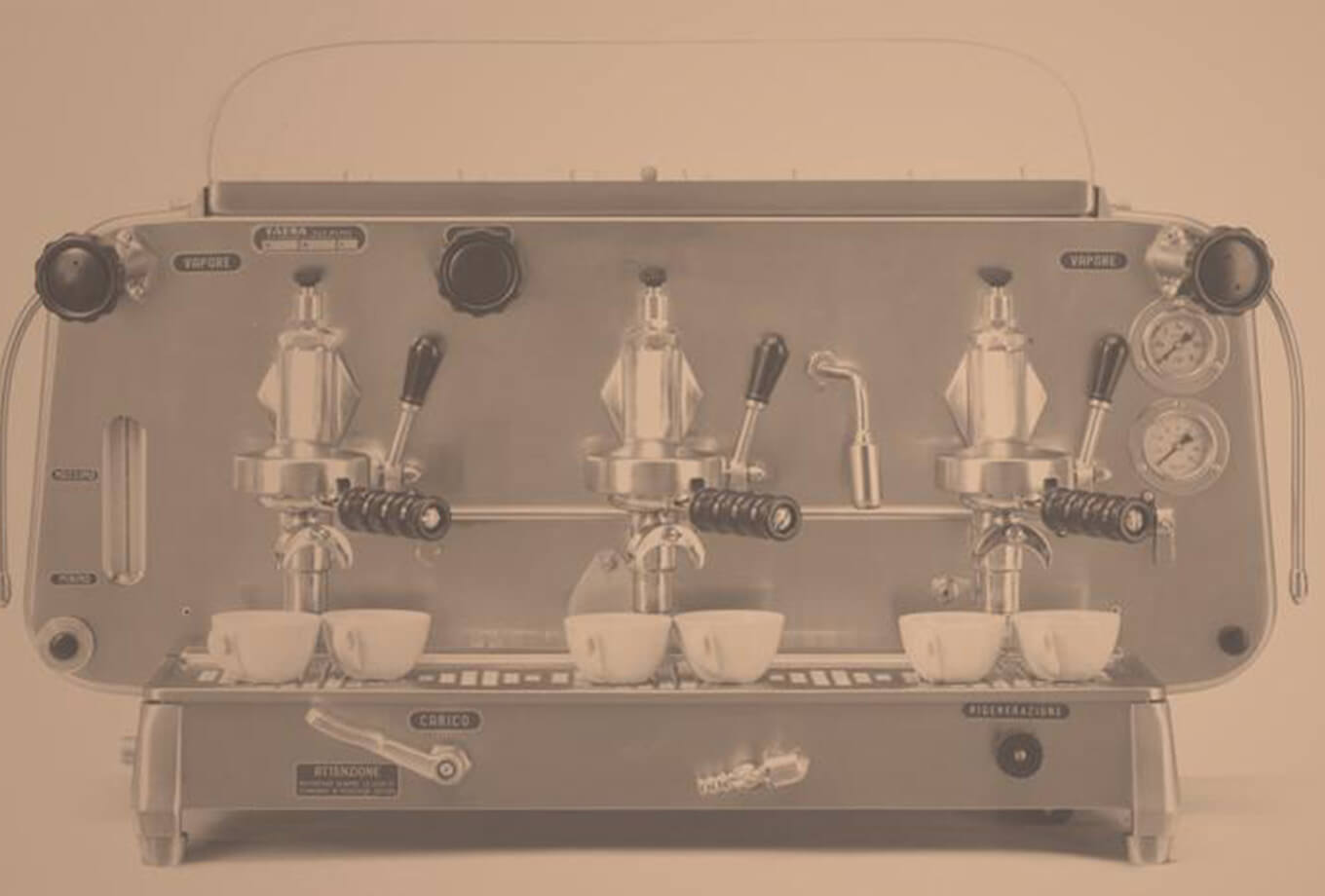
A ’60-as évek új típusú kávégépei
Az 1961-ben bemutatott Faema E61-es eszpresszógép, amelyet Ernesto Valente tervezett, mérföldkőnek számít az eszpresszókészítés történetében.
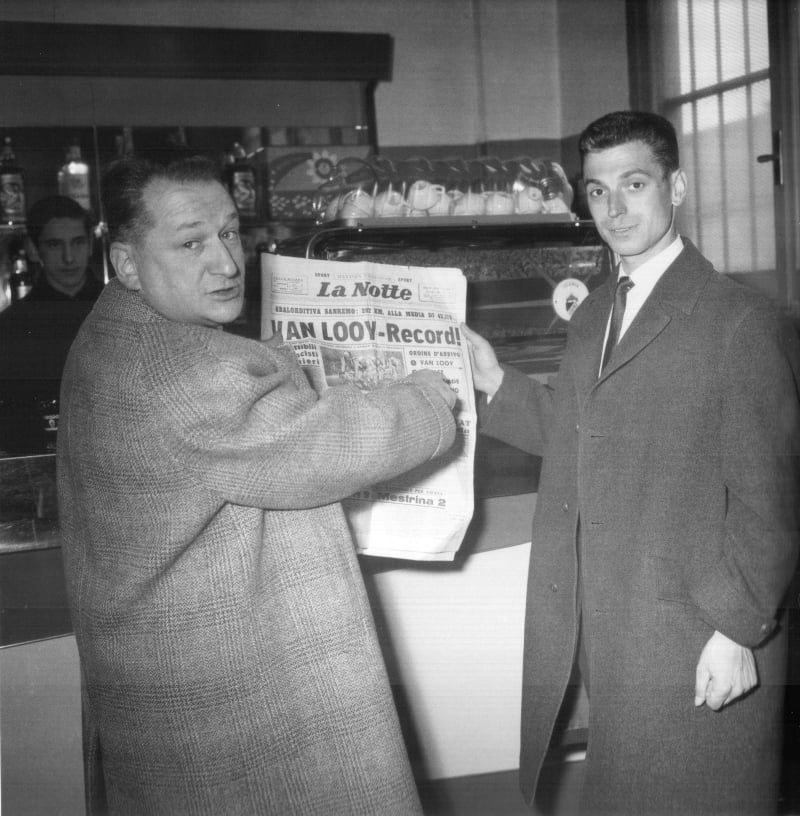
Hatalmas sikere több, egymással összefüggő műszaki újításnak volt köszönhető, amelyek alapjaiban változtatták meg a kávégépek működését. Az E61 esetében egy horizontálisan elhelyezett, hőcserélős kazánt alkalmaztak. A hőcserélő egy kisebb, a fő kazánon áthaladó „belső kazánt” jelent, amelyben a kávékészítéshez használt víz található.
A nagy kazánban lévő, nyomás alatt álló túlfűtött víz (megközelítőleg 118°C) hővezetés útján melegíti fel a hőcserélőben lévő vizet. Ez a víz folyamatosan kering a nagy tömegű – mintegy 4 kilogrammos – főzőfejben, így stabilizálható a gép főzési hőmérséklete. A keringés nem külső szivattyú segítségével történik, hanem természetes fizikai elven, hasonlóan a korábbi, radiátoros fatüzelésű fűtési rendszerekhez. Ezt Magyarországon etázs- vagy gravitációs fűtésnek nevezték.
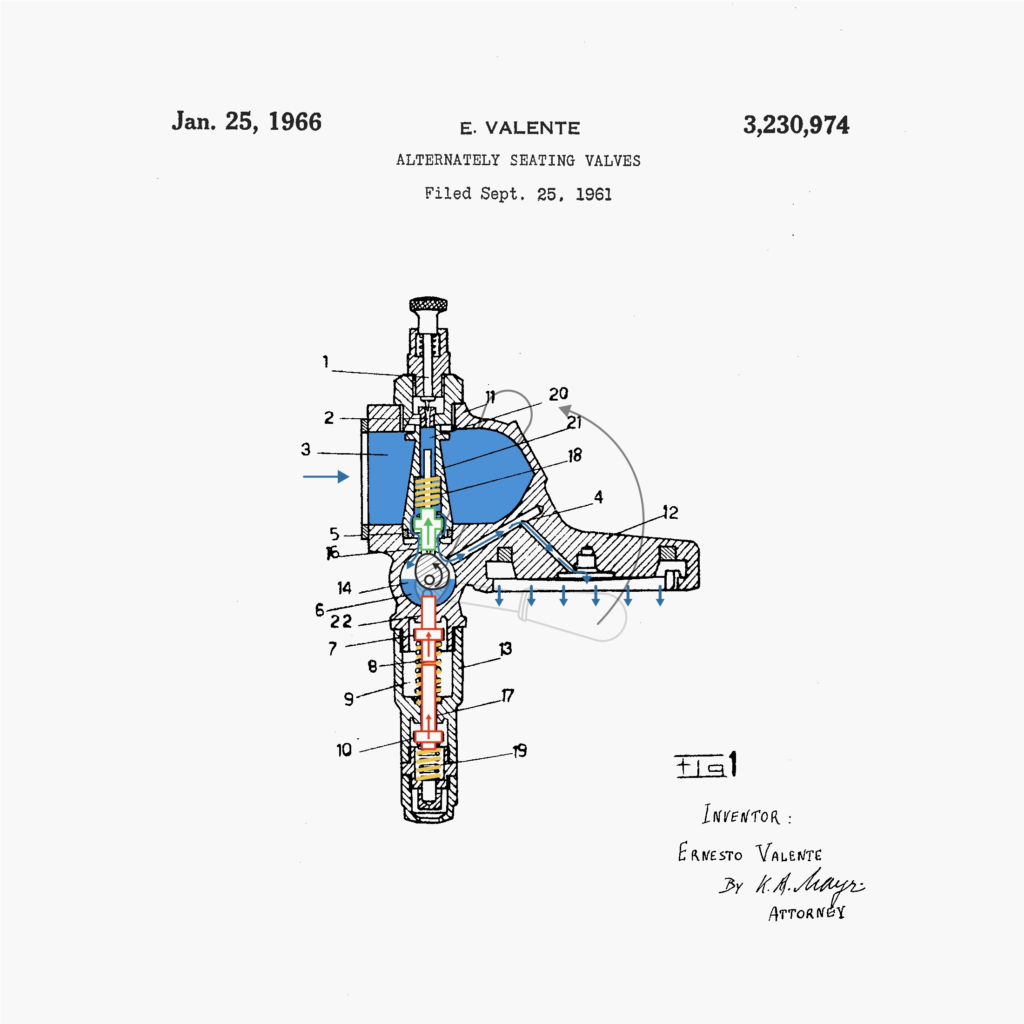
A folyamat során a melegebb, kisebb sűrűségű víz a főzőfejbe áramlik, ahol hőt ad le a környező levegőnek, majd lehűl. A nagyobb sűrűségű hidegebb víz lesüllyed, és az alsó csövön keresztül visszatér a hőcserélő aljába. Ez az állandó körkörös áramlás folyamatosan meleg vizet juttat a főzőfejbe, így biztosítja annak stabil hőmérsékletét.
Amikor a barista megkezdi az eszpresszó készítését, friss, hideg vizet pumpál a hőcserélő alsó részébe, majd kinyitja a főzőfej manuális szelepét. A víz ekkor a hőcserélő mindkét oldaláról a főzőfej felé áramlik, ahol a hidegebb és melegebb víz összekeveredik. A főzőfej nagy hőtároló tömege kiegyenlíti a hőmérsékletet, így a kávé készítése során állandó hőmérsékletű víz jut a kávéra. A hőcserélős technológia további előnye, hogy egyetlen gépen belül megoldhatóvá vált a kávéfőzéshez ideális hőmérsékletű víz és a tejhabosításhoz szükséges gőz egyidejű biztosítása.
Ebben az időszakban az E61-gyel vezették be a villanymotorral hajtott forgólapátos szivattyúk alkalmazását is az eszpresszógépeknél. A korábbi gépekben a kávékészítéshez szükséges, 6–9 bar nyomást rugós dugattyúk állították elő, míg a szivattyús megoldással már finoman szabályozható, állandó 9 bar nyomás vált elérhetővé.
A forgólapátos szivattyú a térfogat-kiszorítás elvén működik. A forgórész excentrikusan helyezkedik el a réz szivattyúházban, és benne általában grafitból készült csúszólapátok találhatók. A rotor forgása közben a lapátokat a centrifugális erő a szivattyúház belső falához préseli, így váltakozó térfogatú kamrák jönnek létre. A szívóoldalon a kamrák térfogata megnő, vákuum keletkezik, amely felszívja a vizet – ezt a hálózati víznyomás is segíti. A nyomóoldalon a kamrák térfogata csökken, a víz összenyomódik, majd nagy nyomással távozik.
Ennek a folyamatos és gyors térfogatváltozásnak köszönhetően a szivattyú egyenletes térfogatáramot és stabil nyomást biztosít, ami kiemelten fontos az eszpresszókészítés során, mivel a megfelelő kivonatoláshoz szabványos, 9 bar nyomás szükséges.
Novel coffee machines in the 1960s
The Faema E61 espresso machine, introduced in 1961 and designed by Ernesto Valente, is a milestone in the history of espresso making. Its huge success was due to several interrelated technical innovations that fundamentally changed the way coffee machines worked. In the case of E61, a horizontally positioned boiler with a heat exchanger was used. A heat exchanger is a smaller “internal boiler” that passes through the main boiler, in which the water used to make coffee is located.
The pressurized superheated water in the large boiler (approximately 118°C) heats the water in the heat exchanger by means of heat conduction. This water circulates continuously in the heavy brew head weighing about 4 kilograms to stabilize the brewing temperature of the machine. The circulation is not driven by an external pump, but works on a natural physical principle, similar to the previous radiator wood-burning heating systems. In Hungary, this was called etage or gravity heating.
During the process, warmer, lower-density water flows into the brew head, where it gives off heat to the surrounding air and then cools down. The colder water of higher density sinks and returns to the bottom of the heat exchanger through the bottom pipe. This constant circular flow continuously supplies hot water to the brew head for stable temperature.
When the barista starts making espresso, he pumps fresh, cold water into the lower part of the heat exchanger and then opens the manual valve on the brew head. The water then flows from both sides of the heat exchanger towards the cooking head, where the colder and warmer water mix. The high heat storage mass of the brew head equalizes the temperature, so that water at a constant temperature is applied to the coffee during preparation. Another advantage of heat exchanger technology is that it has become possible to simultaneously supply water at the ideal temperature for brewing coffee and steam for milk frothing within a single machine.
During this period, the E61 was also used to introduce the use of rotary vane pumps driven by electric motors in espresso machines. In previous machines, the pressure of 6-9 bar required for making coffee was produced by spring pistons, while with the pump solution, a finely controllable, constant pressure of 9 bar became available.
The rotary vane pump works on the principle of displacement. The rotor is eccentrically located in the copper pump casing and usually contains sliding blades made of graphite. As the rotor rotates, the blades are pressed against the inner wall of the pump casing by centrifugal force, creating chambers of varying volume. On the suction side, the volume of the chambers increases, creating a vacuum that absorbs the water. This is also helped by the mains water pressure. On the pressure side, the volume of the chambers decreases, the water is compressed and then expelled with high pressure.
This continuous and rapid volume change enables the pump to provide a steady flow and stable pressure, which is of paramount importance during espresso production, as a standard pressure of 9 bar is required for proper extraction.