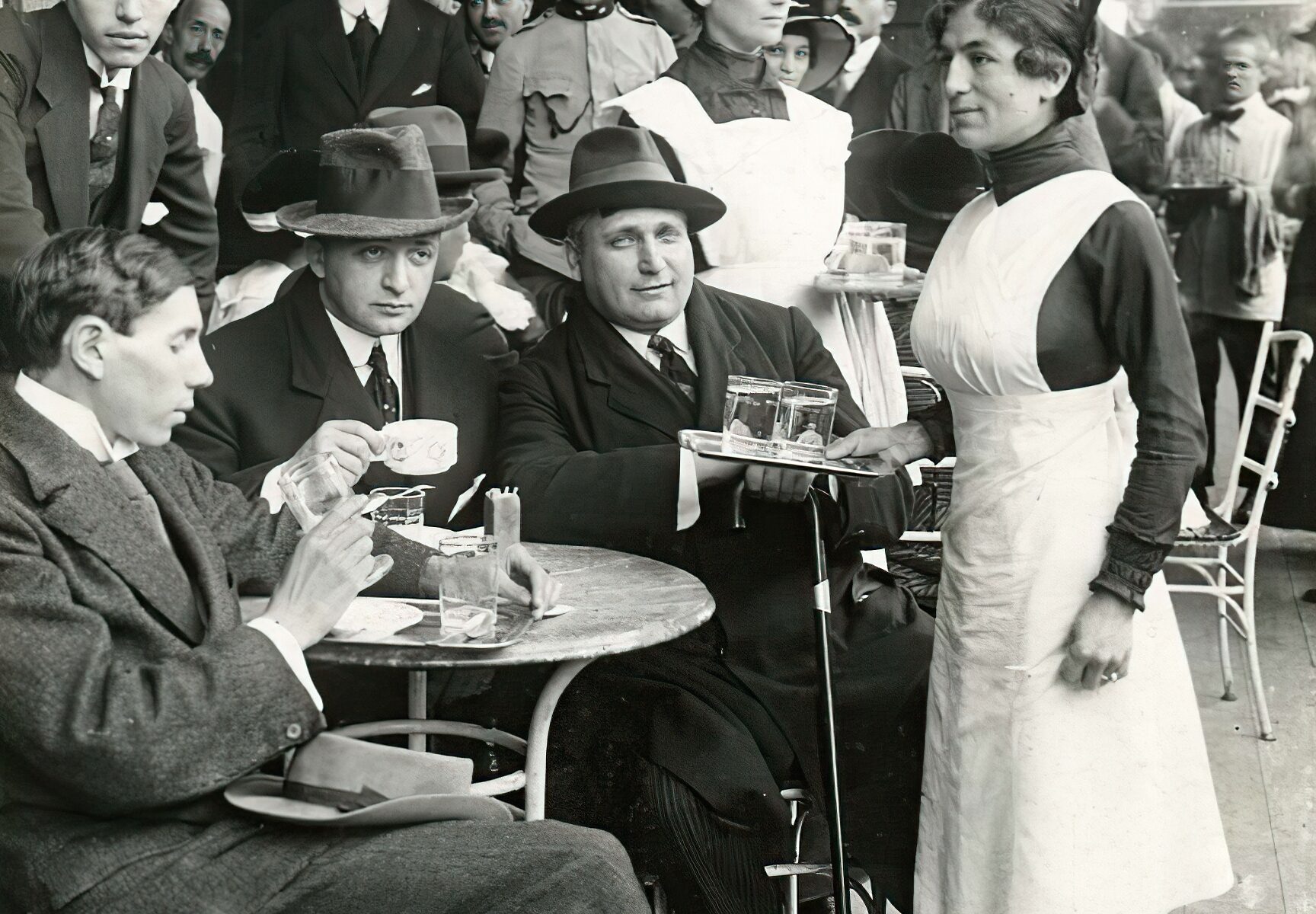
A nagy találkozás
„Egy ízben Kóbor Tamás Szegeden járt, s a társaság egy kávéházban összehozta Tömörkény Istvánnal. Kíváncsian várták, hogy a két író mivel kezdi az ismeretséget, mit fognak egymásnak mondani. Hát bizony nem szóltak egy szót sem. Tömörkény nagyokat hallgatott, csak ültek szótlan, néma csöndben egymás mellett. Csak egy órai hallgatás után szólalt meg Tömörkény: – Mondja, Kóbor úr, maga sütteti a haját?”
Bíró-Balogh Tamás: Egyebekben tökéletesen megfelel a valóságnak. Jelenkor, 2020. január–június, 63. évf. 1–6. sz., 160.
Illés Béla: Halandzsa
Lelkiismeretem parancsára megkísérlem egy történelmi tévedés kiigazítását, egy történelmi igazságtalanság jóvátételét. A köztudatban a halandzsanyelv feltalálójaként Karinthy Frigyes szerepel, az ő nevéhez fűződik a feltalálónak (halála után) kijáró elismerés és dicsőség, holott a halandzsanyelvet (amelyet szerzője „az igazi életbölcsesség nyelvének” nevezett, ő tudta, miért, én csak sejtem), ezt a jelentős műnyelvet nem Karinthy alkotta, hanem egy Lax nevű képügynök (keresztnevét elfelejtettem), aki 1910 és 1918 között minden estéjét a New York kávéház erkélyén töltötte, üzletkötéseket tervezve, de mivel erre lehetőség nemigen volt, meséléssel. A kis, keszeg, szemüveges, vöröshajú, halk szavú ember született mesemondó volt. Egy-két ismert, vagy csak félfüllel hallott és félreértett tényből fordulatos, színes, izgalmas történeteket komponált, a szó szoros értelmében kapásból és órákon át lekötötte még ismeretlen írókból, festőkből, meg színészekből és már elfelejtett írókból, festőkből, meg színészekből álló hallgatóságát. Néha-néha leült Lax hallgatói közé Karinthy Frigyes is (aki, mert eredeti alkotó volt, másokban is megbecsülte az eredetiséget), és egy ízben magával hozta Somlyó Zoltánt és Kosztolányit is: hallgassák meg ők is a mestert. Somlyó egy darabig figyelte a mesemondót, figyelés közben elbóbiskolt, és amikor felébredt (a hallgatóság közt ülve), számolócédulákra verset írt, úgy emlékszem, egy ültében kettőt is. Kosztolányi kis ideig fejcsóválva hallgatta Laxot, néha helyeselt is neki, aztán idegesen felugrott és a szó szoros értelemben elrohant, nem tudta elviselni, hogy nem őrá figyelnek és nem ő róla beszélnek. A halandzsanyelvet Lax mester a New York karzatán mutatta be és ott próbálta ki. Nem egy emberen — többön. Egyiktől-másiktól elismerést, némelyik kísérleti alanytól viszont hatalmas pofont kapott művészetéért. Kipróbálta a halandzsanyelvet Bródy Sándoron is. „Sándor bá”, miután Lax háromszor-négyszer intézte hozzá ugyanazt a kérdést, de ő még mindig nem tudta, mit kérdeznek tőle, felugrott és kirohant a kávéházból. A bejárat előtt egy konflis állott. „Sándor bá” karonfogta a konflis pálinka- és bagószagú kocsisát. „Mondj valamit, édes fiam!” — „Mit mondjak, nagyságos úr?” — „Amit akarsz, édes fiam.” — „Hát, nagyságos úr, ami azt illeti, én egy koronát akarok — snapszra —, vagy ha annyi nincs, akkor három hatost.” Bródy Sándor zsebéből egy ötkoronást kotort elő és a kocsis markába nyomta. „Hál’istennek mégsem őrültem meg! — mondotta megkönnyebbülten felsóhajtva. — Mit gondolsz — fordult ismét a kocsishoz — üssem agyon azt a vörös gazembert ?” — „Nem érdemes, nagyságos úr! — felelte a kocsis. — Az ilyesmiből az embernek még kellemetlenségei lehetnek.” — „Igazad van, édes fiam” — mondotta Bródy Sándor, és még egy koronát adott a bagó- és pálinkaszagú és bölcs konfliskocsisnak. Lax zseniális találmánya aligha jut túl a New York karzatán, ha Karinthy nem ismeri fel a halandzsanyelv jelentőségét és lehetőségeit. Karinthy lelkesen és boldogan magáévá tette az „új és mégis sok ezer éves” nyelv ügyét, és nem az ő hibája, hogy minél többen ismerték meg ezt a zseniális műnyelvet, annál kevesebben tudták, hogy a halandzsa feltalálója a vörös hajú képügynök, Lax mester. A nagyszerű mesemondó egy Schulzné nevű asszonyságnál lakott, albérletben, valahol a Szövetség utcában. Lax elbeszélései nyomán Schulzné nagy népszerűségre tett szert a New York kávéház törzsvendégei között. Az első világháború első esztendőiben, amikor Lax Schulznéról beszélt, hallgatói valami ízelítőt kaptak a közhangulatból: kevés és drága az élelmiszer, szapora és egyre ijesztőbb a kor legtipikusabb terméke — a rémhír. Schulznét egy félévszázad tette bölcs asszonysággá. Lax körülbelül negyven esztendős volt. Az asszony több ízben félreérthetetlen célzást tett arra, hogy hajlandó házasságra lépni a nála tíz évvel fiatalabb képügynökkel (néhai Schulz Miksa akkor már több mint tíz esztendeje álmodott a rákoskeresztúri temetőben), de Lax a célzásokból csak azt a következtetést vonta le, hogy egy ideig bátran adós maradhat a lakbérrel. Ezt meg is tette. De valószínűleg rosszul mérlegelte a lehetőségeket. Erre vall, hogy egy este, valamikor 1916 februárjában vagy márciusában a mesemondó képügynök nagyon szomorúan foglalt helyet a New York kávéház erkélyén. — Mi baj, Lax mester? — Komoly baj van, fiúk — sóhajtott a vörös hajú mester. Aztán egyszerre felcsillant vizeskék szeme. Egy ötlet, akár egy szójáték is elfelejtette Laxszal minden baját. — Tudjátok, fiúk, hajnali tíz-tizenegy órakor bejött hozzám Schulzné asszonyság és jó reggeli helyett ezt mondotta: Lax mester, fizetsz, vagy nem laksz.* A halandzsa feltalálója a húszas évek elején halt meg. Akkor már esztendők óta ágyrajáró volt.
Illés Béla: Anekdoták könyve. (Második rész: Halandzsa.) Kortárs, 1959. július–december, 3. évf. 7–12. sz., 169–170.
Egy anekdota József Attiláról
Kaczér Vilmost, a Toll szerkesztőjét Attila köszönésben soha nem tudta megelőzni. A Japán kávéházban ha versíráshoz készült, átment Attilához: – Ugye, Mester, ezt a gyönyörű versét nekem adja? – és máris kiborította kis erszénykéjét és amennyi pénz csak volt nála, a még el nem készült versért kifizette. Ez az összeg mindig több volt, mint amennyit más lap fizetett Attila verseiért. Egyszer egész aktatáskányi kéziratot tett maga elé a kávéház asztalára és rendezgette azokat. Az öreg szerkesztő szótlanul nézte Attila tevékenységét. — Könyv lenne ebből szerkesztő úr, ha … És bár a kávéházban kevesen ültek, Kaczér Attila fülébe súgta: „Kérem, Mester, én is úgy kéregetem a Tollhoz a papirost meg a pénzt. Nem tudok másként segíteni önnek, adok egy címet — csak kérem, ne mondja meg, hogy én küldtem, mert sajnos az ön verseit azok másként értékelik.“ Így került Attila hosszú lelki tusa után Hercz báró elé. Azzal, hogy ismeretlenül segítségét kéri, a fogadás módja, a hangfogó szőnyegek, ajtók, emberek, akik a külvilágot átszűrve közvetítették Hercz báró felé, a hatalom szimbólumát testesítették meg. Végre megnyílt az utolsó ajtó. Attila a becsukott ajtó mellett megállt. Úgy érezte, ő áll és ott ül a „Haszon“, így kellett kérelmét előadnia. A báró úr ismételten kérdezte: ki ajánlotta önt hozzám? — s ragaszkodott makacsul ehhez a kérdéshez. Attila igyekezett irányítani a beszélgetést, mert Kaczért nem nevezhette meg. Kit nevezzen meg? — Bárónak báró lehet a barátja — és igen sok a báró. Az ő ismerősei közül Hatvany Bertalan fiatal Hercz úrhoz, viszont Lajos különb, felette áll egész biztosan, ő soha nem hagyna így állni egy költőt. — És észre sem vette, máris bemondta Hatvany Lajos nevét. „Kérem, jöjjön vissza egy negyed óra múlva“ — ezzel bocsátotta el Attilát. Ez lélegzetelállító pillanat volt. Hatvanyt okvetlen meg kell találnia, különben hazugságban marad. Hivatkozott egy emberre, aki semmiről nem tud semmit. — Hercz most telefonáltat… Ő is elindult telefonfülkét keresni. Tárcsázott, rossz számot kapott, majd a szám mással beszélt. — Hátha éppen vele. — Csak arra gondolt, hogy szégyenben marad Hatvany előtt. Végre megkapta a számot — s közölték vele, hogy Hatvany a strandra indult… Hogy melyikre, nem tudják. Találomra kérte a Palatinus strandot. Hallotta a megafonban Hatvany Lajos nevét, majd a telefonban Hatvany hangját. Attila fellélegzett, megelőzte Hercz bárót, mert előbb sikerült neki Hatvany Lajossal beszélnie, aki megnyugtatta: Mindent vállalok Attila, érted, de légy óvatos, mert a te baloldali verseid elriaszthatják. Nem rossz ember, de a bonyodalmakat nem szereti. Ha megszeret, hiszem, hogy az összes verseidhez kapsz papírt, de most a verseid megjelenéséért tégy engedményt, a többit én magamra vállalom. Így tért vissza Attila Hercz úrhoz, aki Hatvanyval átnézette a versek kiválogatását és szép fehér papirost kapott a Medvetánc című kötethez, amit éppen ezért vállalt a Révai Kiadó olyan formán, hogy pénzt ugyan nem kapott, de a megjelent háromezer példányból ezret Attilának adtak, melyek eladásáról saját maga gondoskodhatott.
Kilencven éve lett bohémtanya a legendás Hadik kávéház
„(…) A Hadik az első világháború után kezdett igazán népszerűsödni: írók, művészek, bohémek és tisztelőik, barátaik, bámulóik híresítették fővárosszerte, de még vidéken is. Karinthy Frigyesnek 1921-től haláláig a legintimebb törzskávéháza lett. Azért is, mert a közelben, a Verpeléti, ma Karinthy úton lakott. Pár perc kellett, és törzsasztalánál a neki fenntartott helyet elfoglalhatta… A Hadik a találkozások, jóízű tereferék, irodalmi ugratások, beszélgetések, hangulatos közéleti és szerelmi randevúk, baráti együttlétek színtere lett. Számos játék születésének is a helye, így például a ma is divatozó »ország-város-állat-híresség« játéké, vagy az akkor hódító útjára indított barkochbáé. Népszerű volt az eszperente – a szójáték csupa e betűvel – és más rímes és ritmusos rögtönzések, szóláncok. Nem is csoda, hiszen olyan vendégek, asztaltársak gyűltek oda, mint például Tersánszky, Somlyó Zoltán, Kosztolányi, Heltai, Surányi Miklós, Kemény Simon, Zelk Zoltán, Devecseri Gábor és a még fiatalabbak. Szívesen játszott és sakkozott ott József Attila, Rejtő Jenő és a fiatalon elhunyt humorista, Aszlányi Károly. A Hadikban volt az úgynevezett Szávay sakk-kör gyülekezőhelye és törzsasztala. Az elnök nem volt más, mint Karinthy Frigyes. A kávéházban viccet mesélni nem volt ajánlatos. A törzsközönség arról volt nevezetes, hogy minden új pesti viccet azonnal ismert. Csak olyan hangozhatott el és aratott sikert, amit még senki sem hallott. Az egész társaság cechjét a vesztesnek kellett állnia, ha a poént mesélés közben valaki »lelőtte«. Számos talány, tréfa, vicc és anekdota keletkezett a Hadikban. (Rendszeres látogatója volt Grätzer József, a rejtvényszerzés korabeli nagymestere is.) Karinthy a viccek budapesti terjedési sebességét a Hadikban mérte le. Kigondolt egyet, és az ott tartózkodóknak elmesélte. Rögtön utána útra kelt, hogy másik kedves helyére, az irodalmi központot is jelentő Centrálba (ma a Károlyi Mihály utcában csak a helye van meg emléktáblával jelölve) látogasson. Fél nap sem telt el, és ott hallotta vissza a sajátját. Híres anekdota a Hadikból az is, hogy egy, esténként rendszeresen ott kéregető koldusnak egyszer azt mondta Karinthy, hogy nincs pénze. Ő erre feneketlen zsebeibe nyúlva maréknyi aprópénzt húzott elő, és e szavakkal fordult a jeles íróhoz: szívesen adok kölcsön. A húszas évek közepétől az üzlet az utcára kihelyezett asztalokkal, »flaszterterasszal« bővült. Különösen a tavaszi és kora őszi vendégek kedvelték a remek kilátást, élvezték a csöndes lágymányosi forgalmat. A kirakott asztalok mellől, az ablakokhoz ágaskodva sokszor bekopogtak a tereferélőkhöz, sakkozókhoz, a játszótársakhoz valami üzenettel, így például Karinthyhoz is, hogy induljon már haza, mert régen kihűlt az ebédje. (Fennmaradt olyan anekdota is, hogy Ferenc fia születésének hírével is a Hadikban találták meg.) A kávéház tulajdonosai, a Kaiser testvérek jó barátságba kerültek Karinthyval. Mindent elkövettek, hogy jól érezze náluk magát, így azután nemcsak állandó tanyája, hanem egyik fontos munkahelye is lett. Sok műve született a márványasztaloknál. (Azt írták róla: otthoni íróasztala csak szobadísz volt.) Ebből az időből nem maradt ránk a kávéházról olyan kép, amely a bejáratot a kirakott asztalokkal ábrázolja. Legalábbis mindenki így hitte. A közelmúltban azonban a nagy múltú Posch vendéglős család doyenje, az idén 90 esztendős Laci bácsi az itt bemutatott amatőr képpel örvendeztetett meg bennünket. A húszas évek végétől a Hadikban találkoztak az akkori motorversenyzők is. Asztaltársaságának Laci bácsi is egyike. Ő készítette a történeti értékű felvételt. (A jeles Posch családról itt annyit, hogy három generációjának 13 tagja harminc vendéglátó üzletben dolgozott. A fővárosban és vidéken egyaránt jó nevet szereztek szakmájuknak. Mára, mint annyi más neves kávéház és irodalmi-művészeti emlékhelyünk, a Hadik is csak könyvekből ismert. Falán szerény emléktábla olvasható. Hírét, jelentőségét őrzi a szakma múzeuma, és néhány, még élő egykori vendége. Akik, ha arra járnak, elérzékenyülnek, s nézik a járdát: máig megmaradtak ugyanis az egykori asztalrögzítők nyomai.“
Draveczky Balázs: Kilencven éve lett bohémtanya a legendás Hadik kávéház. Népszabadság – Budapest melléklet, 1996. április 12.
The great meeting
“Tamás Kóbor once visited Szeged, and the company introduced him to István Tömörkény in a café. They were curious to see how the two writers would start their acquaintance, what they would say to each other. Well, they didn’t say a word. Tömörkény was silent for a long time, and they just sat next to each other in total silence. It was only after an hour of silence that Tömörkény spoke: “Tell me, Mr. Kóbor, do you have your hair set?”
Tamás Bíró-Balogh: Otherwise, it corresponds perfectly to reality. Jelenkor, January-June 2020, Year 63 Issues 1–6, 160
Béla Illés: Gibberish
At the command of my conscience, I will attempt to correct a historical error, to make amends for a historical injustice. Frigyes Karinthy is known as the inventor of gibberish, and the recognition and glory due to the inventor (after his death) is linked to his name, although gibberish (which its author called “the language of true wisdom of life”, he knew why, I can only guess), this significant artificial language, was not created by Karinthy, but by a picture agent named Lax (I forgot his first name), who spent every evening on the balcony of the New York café between 1910 and 1918, planning deals, but since there was little opportunity for that, by storytelling. The short, scrawny, bespectacled, red-haired, soft-spoken man was a born storyteller. He composed twisted, colourful, exciting stories from one or two well-known or only half-hearted facts that he had heard and misunderstood, and literally engaged his audience of as yet unknown writers, painters, and actors and forgotten writers, painters and actors for hours. From time to time, Frigyes Karinthy sat down among Lax’s listeners (who, because he was an original artist, appreciated the originality of others as well), and once he brought Zoltán Somlyó and Kosztolányi with him: they should listen to the master as well. Somlyó watched the storyteller for a while, dozing off while watching, and when he woke up (sitting among the audience), he wrote poems on counting slips, I think he wrote two in one sitting. Kosztolányi shook his head at Lax for a while, sometimes even approving of him, then jumped up nervously and literally ran away, he couldn’t stand the fact that they weren’t paying attention to him and talking about him. Master Lax demonstrated the gibberish language in the gallery of the New York café and tried it there. Not on one person but on several people. He received recognition from some of them, but a huge slap in the face from some of the test subjects for his art. He also tried gibberish on Sándor Bródy. “Uncle Alexander,” after Lax had asked him the same question three or four times, but he still didn’t know what he was being asked, jumped up and ran out of the café. In front of the entrance stood a hansom cab. “Uncle Sándor” grabbed the arm of the coachman, who smelled of brandy and tobacco. “Tell me something, son!” “What shall I say, sir?” “Whatever you want to, son.” “Well, sir, as a matter of fact, I want one crown for brandy or, if you don’t have that many, three sixes.” Sándor Bródy dug out a five-crown note from his pocket and thrust it into the coachman’s hand. “Thank God I haven’t gone crazy!, he said, sighing with relief. “What do you think?”, he turned to the coachman again. “Should I kill that red scoundrel?” “You shouldn’t, sir!, the coachman replied. “Such things can get you in trouble.” “You are right, son,” said Sándor Bródy, and he gave another crown to the wise coachman, who smelled of tobacco and brandy. Lax’s ingenious invention could not have made it beyond the gallery of the New York café if Karinthy had not recognized the significance and possibilities of gibberish. Karinthy enthusiastically and happily embraced the cause of the “new and yet many thousands of years old” language, and it was not his fault that the more people became acquainted with this ingenious lingo, the fewer people knew that the inventor of gibberish was the red-haired picture agent, Master Lax. The great storyteller rented an apartment from a lady called Mrs. Schulz somewhere in Szövetség utca. As a result of Lax’s stories, Mrs. Schulz gained great popularity among the regulars of the New York café. In the first years of the First World War, when Lux spoke about Mrs. Schulz, his listeners got a taste of the public mood: food was scarce and expensive, the most typical product of the age — rumour — was proliferating and increasingly frightening. Mrs. Schulz was made wise by half a century. Lax was about forty years old. The woman repeatedly made clear hints that she was willing to marry the picture dealer ten years her junior (the late Miksa Schulz had been lying in the cemetery of Rákoskeresztúr for more than ten years), but Lax only drew the conclusion from the hints that he could safely remain in debt with the rent for a while. And he did so. But he probably misjudged his options. This is evidenced by the fact that one evening, sometime in February or March 1916, the storyteller was very sad as he took a seat on the balcony of the New York café. “What’s the matter, Master Lax?” “There’s a serious problem, boys,” sighed the red-haired master. Then, suddenly, his water-blue eyes lit up. An idea, even a pun, made Lax forget all his troubles. “You know, boys, at ten or eleven in the morning, Mrs. Schulz came to my room and instead of a good breakfast, she said, “Master Lax, you pay or get out of my home.” The inventor of gibberish died in the early twenties. At that time, he had been a lodger for years.
Béla Illés: Book of Anecdotes. (Second part: Gibberish) Kortárs, July-December 1959, Year 3, Issues No. 7–12, pp. 169–170
An anecdote about Attila József
Attila could never overtake Vilmos Kaczér, the editor of the journal Toll, in greeting him. In the Japanese Café, when he was preparing to write poetry, he went over to Attila: “Master, you give me this beautiful poem, don’t you?” and he immediately knocked out his little purse and paid for the unfinished poem, as much money as he had. This amount was always more than what other newspapers paid for Attila’s poems. Once he put a whole briefcase of manuscripts on the table of the café and arranged them. The old editor watched Attila’s activities in silence. “This would make a book if…” And although there were few people sitting in the café, Kaczér whispered in Attila’s ear: “Please, Master, I also beg for paper and money for Toll. I can’t help you in any other way, I’ll give you a title. Please don’t tell anyone that I sent it, because unfortunately they value your poems differently.” This is how Attila, after a long mental struggle, came before Baron Hercz. By asking for his help from an unknown person, the way of receiving him, the sound-catching mats, the doors, the people who filtered the outside world to Baron Hercz, embodied the symbol of power. Finally, the last door opened. Attila stopped next to the closed door. He felt that he was standing and sitting there with the “Benefit”, so he had to present his request. The baron asked again: who recommended you to me? He insisted stubbornly on this question. Attila tried to control the conversation, because he could not name Kaczér. Who should he name? “A baron befriends other barons, and there are quite a lot of them.” Of his acquaintances, Bertalan Hatvany is a young man to Mr. Hercz, but Lajos is different, he is certainly above him, he would never let a poet stand like this. He didn’t even notice it, he already announced the name of Lajos Hatvany. “Please come back in a quarter of an hour,” he said to Attila. It was a breathtaking moment. He must make sure to find Hatvany, otherwise he will remain a liar. He had referred to a man who knew nothing about anything. “Hercz is making a call…” He also went to look for a phone booth. He dialled, got the wrong number, and then the line was engaged. “Maybe he is talking to him.” He only thought that he would be ashamed in front of Hatvany. At last he was put through and told that Hatvany had left for the beach but no one knew which one. He asked for the Palatinus beach at random. He heard Lajos Hatvany’s name in the megaphone, and then Hatvany’s voice on the phone. Attila breathed a sigh of relief, overtaking Baron Hercz, because he had first managed to talk to Lajos Hatvany, who reassured him: “I’ll do everything, Attila, you know, but be careful, because your left-wing poems may scare him away. He is not a bad person, but he hates complications. If he comes to like you, I’m sure you will get paper for all your poems, but now make a concession for their publication, I will take care of the rest.” This is how Attila returned to Mr. Hercz, who went through the selection of poems with Hatvany and received nice white paper for the volume Bear Dance, which was accepted by the Révai Publishing House in such a way that he did not receive any money, but of the three thousand copies published, a thousand were given to Attila, which he could take care of selling himself.
Ninety years ago, the legendary Hadik Café became a bohemian haunt
“(…) Hadik really started to become popular after the First World War. Writers, artists, bohemians and their fans, friends and admirers made it famous throughout the capital, but even in the countryside. From 1921 until his death, it became the most intimate regular café of Frigyes Karinthy. Also because he lived nearby, on Verpeléti út, now Karinthy út. It took a few minutes for him to take the seat reserved for him at his regular table… Hadik had become the scene of meetings, tasty talks, literary teasing, conversations, convivial public and love dates, and gatherings of friends. It was also the place of the birth of many games, such as »country-city-animal-celebrity«, which is still in vogue today, or the highly popular Twenty Questions, which made its first appearance at that time. Esperente – a play on words only with the letter E – and other rhyming and rhythmic improvisations and word chains were popular. No wonder, as guests and table mates such as Tersánszky, Zoltán Somlyó, Kosztolányi, Heltai, Miklós Surányi, Simon Kemény, Zoltán Zelk, Gábor Devecseri and the even younger ones gathered there. Attila József, Jenő Rejtő and the comedian Károly Aszlányi, who died young, liked to play, including chess, there. Hadik was the gathering place and the regular table of the Szávay chess club. The president was none other than Frigyes Karinthy. It was not a good idea to tell jokes in the café. The regulars were known to become familiar with every new joke in Pest immediately. Only jokes that no one had heard could be told and achieve success. The loser had to pay the whole company’s bill if someone spoiled the joke while they were telling it. Hadik witnessed the birth of many riddles, jokes and anecdotes. (József Grätzer, the grand master of puzzle solving at the time, was also a regular visitor.) Karinthy measured the speed at which jokes spread in Budapest in Hadik. He invented one and told it to the people there. Immediately afterwards, he set off to visit his other favourite place, Central, which was also a literary hub (today only its place in Károlyi Mihály utca is marked with a memorial plaque). Less than half a day passed, and there he heard his own joke back. Another famous anecdote from Hadik is that a beggar who regularly stayed there in the evenings was once told by Karinthy that he had no money. He reached into his bottomless pockets and pulled out a handful of small coins, and turned to the illustrious writer with the words: I will gladly lend you. From the mid-twenties, the shop was expanded with tables placed on the street, a »pavement café«. Especially the spring and early autumn guests liked the great view and enjoyed the quiet traffic of Lágymányos. From the outdoors tables, some people leaned on the windows and often knocked on the pane with a message for the players, chess players, and playmates, such as Karinthy, to go home because his lunch had long since run cold. (Legend has it that he was found in Hadik with the news of the birth of his son Ferenc.) The owners of the café, the Kaiser brothers, became good friends with Karinthy. They did everything to make him feel comfortable with them, so Hadik became not only a permanent venue but also an important workplace for him. He created many of his works at the marble tables. (Allegedly, he only used his home desk as a decoration.) From this time, we have no picture of the café that depicts the entrance with the outdoor tables At least that’s what everyone believed. Recently, however, the doyen of the long-established Posch restaurant family, Uncle Laci, who is 90 years old this year, delighted us with the amateur picture presented here. From the late 1920s, the motorcycle racers of that time also met in Hadik. Uncle Laci is also one of his table companions. He made the recording of historical value. (Suffice it to say that 13 members of three generations of the illustrious Posch family worked in thirty catering establishments.) They have made a good name for their profession both in the capital and in the countryside. Today, like so many other renowned cafés and our litereary-artistic memorial sites, Hadik is only known from books. Its wall displays a modest memorial plaque. Its fame and significance are preserved by the museum of the profession and some of its still living former clients. Each time they pass by, they get emotional and look at the pavement: the traces of the former table fixers have remained to this day.”
Balázs Draveczky Ninety years ago, the legendary Hadik Café became a bohemian haunt. Népszabadság – Budapest supplement, 12 April 1996