Mi ez? – Ez egy eszpresszó
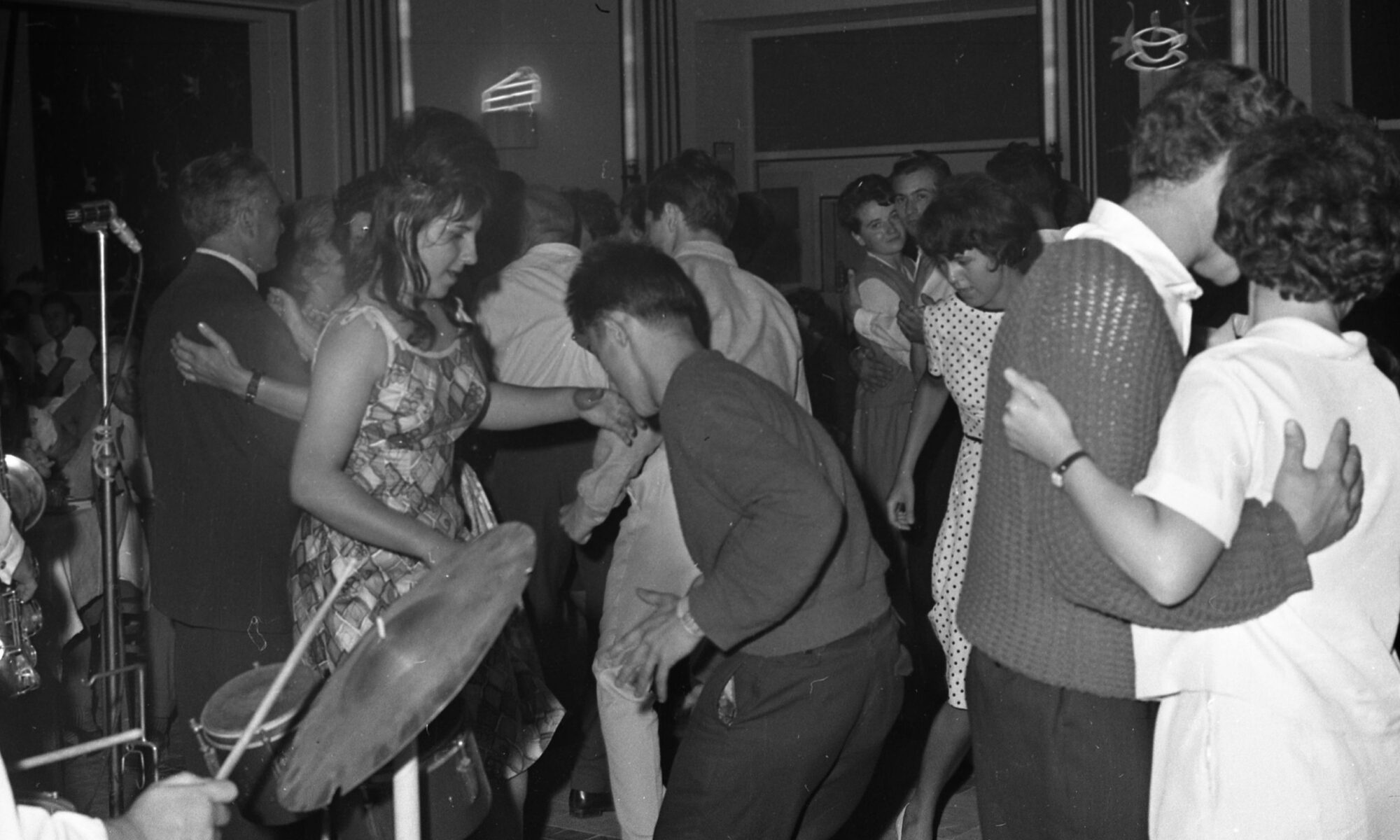
Az 1950-es évek elejétől kiépülő központosított szocialista eszpresszóhálózat megörökölte a vendéglátó terekben való élőzenélés polgári hagyományát. Igaz, még nem Budapest első, 1937 és 1944 közt megnyílt eszpresszóinak idejétől, amelyek iparjogi szempontból – a kicsiny üzletméret okán – a Kávémérők Ipartársulata alá tartoztak. A kávémérésekben pedig mindvégig tilos maradt az élőmuzsikálás. Az örökség a kávéházi világból származott át a már nagyobb alapterületű szocializmus korabeli eszpresszók pódiumaira. A jobbára néhány tagból álló zenekarok vagy sok esetben egyetlen zongorista által szolgáltatott muzsikálás természetes velejárója lett így az eszpresszós időtöltésnek, s az is maradt egészen az 1960-as évek végéig, amikor az élőzenénél nagyságrenddel olcsóbb zeneautomaták mind nagyobb számban kezdtek megjelenni a különféle vendégterekben. Még nagyobb horderejű változást hozott a fiatalabb nemzedékek ízlésváltozása. Az elsöprő erővel fel(illetve a zárt országhatárokon át is be)törő beatzene, a külföldi és mindinkább a hazai együttesek merőben más zenei világa, újszerű mondandója kezdték üressé tenni számukra az elődök muzsikáját. Az eszpresszós élőzene az 1980-as évekre jelentősen visszaszorult, majd a rendszerváltás első évtizedében föl is számolódott – az eszpresszókkal együtt.
Ha szeretné közelebbről megismerni a zene és a presszók kapcsolatát, hallgassa meg Cseh Tamás Eszpresszó c. dalát a kiállítás végén elhelyezett fülhallgatón!
What’s this? – It’s an espresso
The centralized communist espresso network, built from the early 1950s, inherited the middle-class tradition of playing live music in catering facilities. Admittedly, not yet from the time of Budapest’s first espresso shops, opened between 1937 and 1944, which, in terms of industrial law, due to the small size of the business, belonged to the Industrial Association of Café Owners. In cafés, live music remained prohibited throughout. The heritage was transferred from the world of cafés to the podiums of espresso bars of the communist era, which already had a larger floor area. Playing music provided by bands consisting mostly of a few members or, in many cases, by a single pianist, thus became a natural part of the pastime at espressos, and remained so until the late 1960s, when music vending machines, which were an order of magnitude cheaper than live music, began to appear in increasing numbers in various client areas. An even more far-reaching change was brought about by the change in taste of the younger generations. The beat music that broke through with overwhelming force (and even across Hungary’s closed borders), the completely different musical world and novel message of foreign and increasingly domestic bands began to make the music of their predecessors empty for them. Live espresso music declined significantly by the 1980s, and then it was eliminated in the first decade of the democratic transition, along with espressos.
To find out more about the relationship between music and espressos, listen to Tamás Cseh’s song Espresso on the headphones placed at the end of the exhibition.